Kultivars Beyond Land Art
Kultivars Beyond Land Art
artist as farmers, and artists’ cultivation projects.
Residency and conference at The Elterwater Merz Barn by foundation Littoral, UK.

artist as farmers, and artists’ cultivation projects.
Residency and conference at The Elterwater Merz Barn by foundation Littoral, UK.
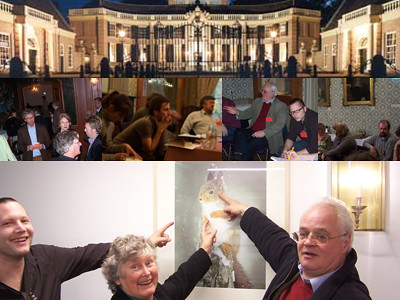
Linking Culture and agriculture as a strategy for a meaningful countryside.
Kasteel Groeneveld


Malin Lindmark Vrijman Ett experiment att framställa brukskärl genom odling. Genom frön, mylla, sol, vatten och tid kan kärl tillverkas till mycket låg energi kostnad. För att återknyta till historien och göra kärlen välbekanta och tillgängliga för alla, formas frukterna i gamla plastdunkar, som i sin välkända form minner oss om en svunnen tid, då allt enkelt kunde framställas av petroleum produkter. Projektet genomförs med stöd av


Right to farm the land
Cooperation between Plan3/Octava, Kultivator and Public globality gardens, with land from Råbelövs gods. In Swedish language, the expression ”farm the land” can be read both as the right to actually farm, thus grow crops in the soil, and as the right to use, or make use, of the land meaning a country, or national state.
During the project ”Right to farm the land”, the three groups Octava/plan3, Kultivator and Public globality gardens cooperated with Råbelövs gods, a big landowner in the south of Sweden, who was willing to provide one hectar of farm land for artistic purposes. (For a large industrial farm as his, 10 000 m² laying like this piece isolated in a forest, is too small to work in a profitable way.)
Close to this piece of land lies a suburb of the city Kristianstad, called Gamlegården (=old farm) that is home to a large community of people that migrated from rural areas in Somalia and the south of Iraq quite recently.
In this suburb we set up an office in an abandoned bankoffice in a small shoppingmall, and started interviewing people asking whether they had farming experience and interest in using a piece of land for growing food. During one week, the message was informally spread that for those who wanted, Rights to farm the land would be granted for at least one year and maybe longer. No costs, but also no help or support was connected to the Rights. The choice to hand over Rights rather than ”this piece of land”, was to avoid creating merely a set of allotment gardens, and imply that the right to make use of it could also apply outside the conventional structures of ownership.
The Rights to farm the land where handed out in spring 2008, and around 40 groups, individuals and families started to grow food. In spite of little Challenges like drought, wild animals and somewhat suspicious neighbours were conquered by the group’s own resources, with little coordination or external support, During Spring 2009, the group – with many fall outs and many newcomers – transformed itself into a formal collective that shares responsibility for water harvesting and working tools.
Film/Installation for the group exhibition ±Plus/Minus by SKART at our dear friends place “Yellow Box”.
We cut trees, chopped wood from our local forest and placed the wood in the living room of Yellow Box. Projecting at the same time a documentation of our work
Fire for friends


making new friends is a stategy for survival by enlarging kultivators group of friends
It was performed at “Supermarket” art fair in Stockholm, and culture week Nybro. Visitors could choose from a selection of vegetables seeds from the seedbank of Kultivators Ranchito. The seeds were planted in paper cups and marked with numbers. The new friends paid 100 swedish kr, and Kultivator promise to raise the plant and send images of how it developes, so that new friends can decide when to come by and harvest.
Open discussion:
How can culture, ecologi and economy meet
How to get the innercity of Stockholm sustainable
Mossutställningar, Birger Jarlsgatan 18A 4tr.
Moderatorer: Malin Lindmark Vrijman och Mathieu Vrijman, Kultivator.
Panel: Eva Helmenius, Vice VD, Kraft&Kultur, Elin Rydström, Lovö Prästgård Drottningholm, Stella d´Ailly, Mossutställningar, Mohamed El abed, Sprong kommunikation.
Arrangörer: Mossutställningar, Sprong
kommunikation.
Med stöd av LRF, Stiftelsen framtidens kultur, Brakspear Oxford Gold Organic.


Tower of Power` Marlene Lindmark and Malin L. Vrijman.
From the exhibition Between Reality and Fairytales in Högsby,
Sweden 2007, a collaboration between Kalmar Art Museum and Högsby.


Exhibition in W139, Amsterdam
‘Das Bild muß die funktion der Kartoffel übernehmen ‘Jörg Immendorf
On December 2005 my family and I moved from Haarlem to a newly-built estate in the country to the north of Nijmegen. Five days later W139 called to ask if I was interested in applying for the post of director. I spent a couple of sleepless nights trying to let the strange concurrence of events sink in, and considered the transition from artist to curator. I realised that the change of roles would mean I d have to take a stance on the social role of the visual arts. And one of the things that popped into my mind in the middle of the night was that a meeting of the minds between artists and farmers could be more important than the present one-sided flirtation of art and philosophy. This inspiration was born out of a healthy aversion to the wish-washy talk about the post-agrarian and post-industrial society . The ideology of the knowledge economy is tacitly based on a geographic distribution between lords and servants. Because the knowledge worker still needs to feed, clothe and warm himself with agrarian and industrial products. In the meantime, in the visual arts, the post-productional artist has emerged and, while his roots are in left-wing philosophy rather than neoliberal thinking, his disparagement of material production is the same. Critical faculties have become more important than creative ones.
KULTIVATOR is a collective of artists and farmers. On the island Öland just off the south coast of Sweden, the three Lindmark sisters and their spouses and children cultivate organic food, and host a residency programme and an international artists practice. In their first major retrospective in W139, potatoes and linseed oil, paintings and sculptures, sheepskins and films will be on show and on sale. The children of KULTIVATOR will live in a village of polyester igloos in the rear space of W139 and offer to trade their toys, comics and computer games.
El Parche was invited to build an installation for the exhibition. The artists collective El Parche creates meeting places were they address political and cultural issues. Graphic designer Floor Wesseling, who designed the wonderful KULTIVATOR logo, will make a paste-up about the agrarian history of the Bijlmer.
SUPERMODEL on Friday 12 October 9 p.m. will be opened by SUPERMACHINE; a procession of agricultural vehicles through the heart of Amsterdam.
Gijs Frieling. Members of Kultivator: Malin Lindmark Vrijman, Kalle Runeson, Mathieu Vrijman, Marlene Lindmark, Henric Stigeborn en Mia Lindmark
El Parche is a group of artists which includes: Herman Mbamba, Olga Robayo, Marius Wang
Thanks to: City of Amsterdam, Ministry of OCW, VSBfonds, SolarOil systems, Agripom, Loonbedrijf K.J. Tromp, Office for Contemporary Art Norway
During the exhibition there will be shown a Molkwerum-cabinet from the collectiion of the Zuiderzeemuseum in Enkhuizen.
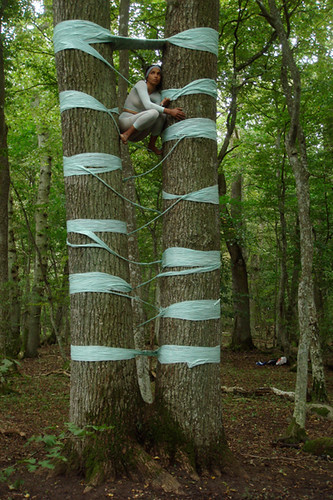
This video-performance has been realised in the forest of Dyestad (Sweden) during a residency in the Guest Atelier of Kultivator.
In terms of this new collaboration, Keity Anjoure wishes to question the intimacy between voice and identity, materialism and freedom, using the first and second degree of language and image
Production: ICILATER, Film maker: Francois Terrie Dance: Keity Anjoure, Visual editing: Stephanie Arrow, Sound editing: Stephanie Arrow and Jean-Pierre Royer, Translation: Ellen Charbonnel, Voices: Malin, Mia, Moa, Ivar, Gerard, Mimi, Nina, Oscar.


Earthworks 2007 Environmental arts and agriculture experiment on site Site – specific – locally produced?
We consider this direction within contemporary artpractice to be the far most relevant at the moment, and we recognize that its resting on long traditions. One predecessor is legendary Robert Smithson, which can be seen as the one establishing the term “site specific” art. His Earthworks were sited “in the physical, raw reality” and related visually and tactile with the surrounding landscape. For Earthworks 2007, we have selected a varied group of emerging Nordic visual artists that will develop and explore the meanings of site specific works today. The artists we have selected to take part work in various contemporary disciplines, such as web based, graffiti/streetart, performance and social interventions, and will naturally work within their known techniques also here. Sited works in our understanding of the word would be works that are located in a specific place within a system and functions within that system. In the premises of Kultivator, which includes a dairy farm, vegetable fields and sheep and chicken breeding, many small scale systems for production can be found, and new ones are constantly invented. The invited artists will during a week long direct physical work go into these systems and create works that challenge (or confirm) the statements of our predecessors. Long term aim/purpose: With globalized society logic, production as ineffective as in our climate, can hardly be defended except from out esthetical or sentimental view. With strong visual statements from young Nordic artists, in contemporary media, we want to offer images of our agricultural landscape that are not sentimental, but heading forward toward new futures. Re- thinking the globalized trade logic into one that sees things in context, or, if you like, as part of a sustainable system.
Participants
Oscar Guermouche, El Parche, Bengt Olof Johansson, Marlene Lindmark, Benn Sena, Helena Wikestam, Lishar Eshkoly, Randy Albright, Kalle Runesson, Sara Sena da Silva


– for memory) is an object a traveler brings home for the memories associated with it. Souvenirs include clothing such as T-shirts or hats, and household items such as mugs and bowls, ashtrays, egg timers, spoons and notepads. They may be marked to indicate their origin: “A Souvenir from Clacton-on-Sea”.
In Japan, souvenirs are known as meibutsu (products associated with a particular region); and omiyage, candies or other edibles to be shared with co-workers. Omiyage sales are big business at Japanese tourist sites.
(Wikipedia)
On the island Öland, where Kultivator is situated, lives approximately 20.000 people all year round, and over one million tourists visits the island in the summer.
The tourist industry is crucial for the economy of the island. One important income for year round Ölanders is the purchase of inexpensive, small thing for tourists to buy; what we call souvenirs. In the exhibition/contest Ölands souvenir 2007, we made an open call for items that would make good souvenirs. People could send in totally new concepts for souvenirs, or just send in a product they already had for sale.
In the exhibition, we are also showing background stories from the maker for each piece, like selling arguments, but here often more personal and/or informastive.
In the regular case, you would choose your favourite souvenir by selecting what to buy. In this exhibition you can vote for the best one by putting a note in a box.
In the autumn, at the harvestfeast of the island, which is the last big tourist attraction before the island ”closes” for winter, we will count the votes and a winner will be named.
Installation/film at local food market, Kalmar.
About the travel of our daily food.


Installation at Gallery Stenhallen, Borgholm


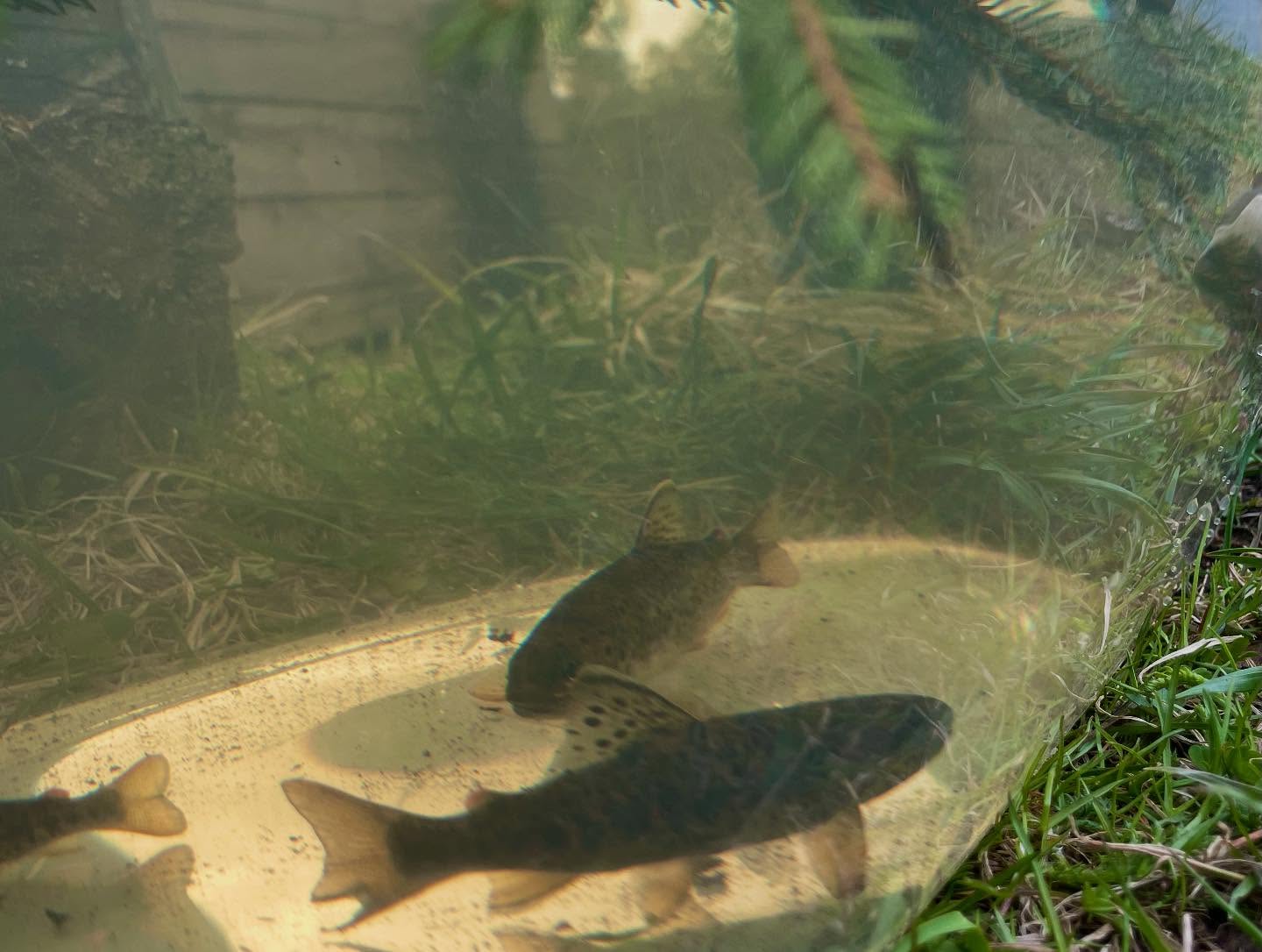
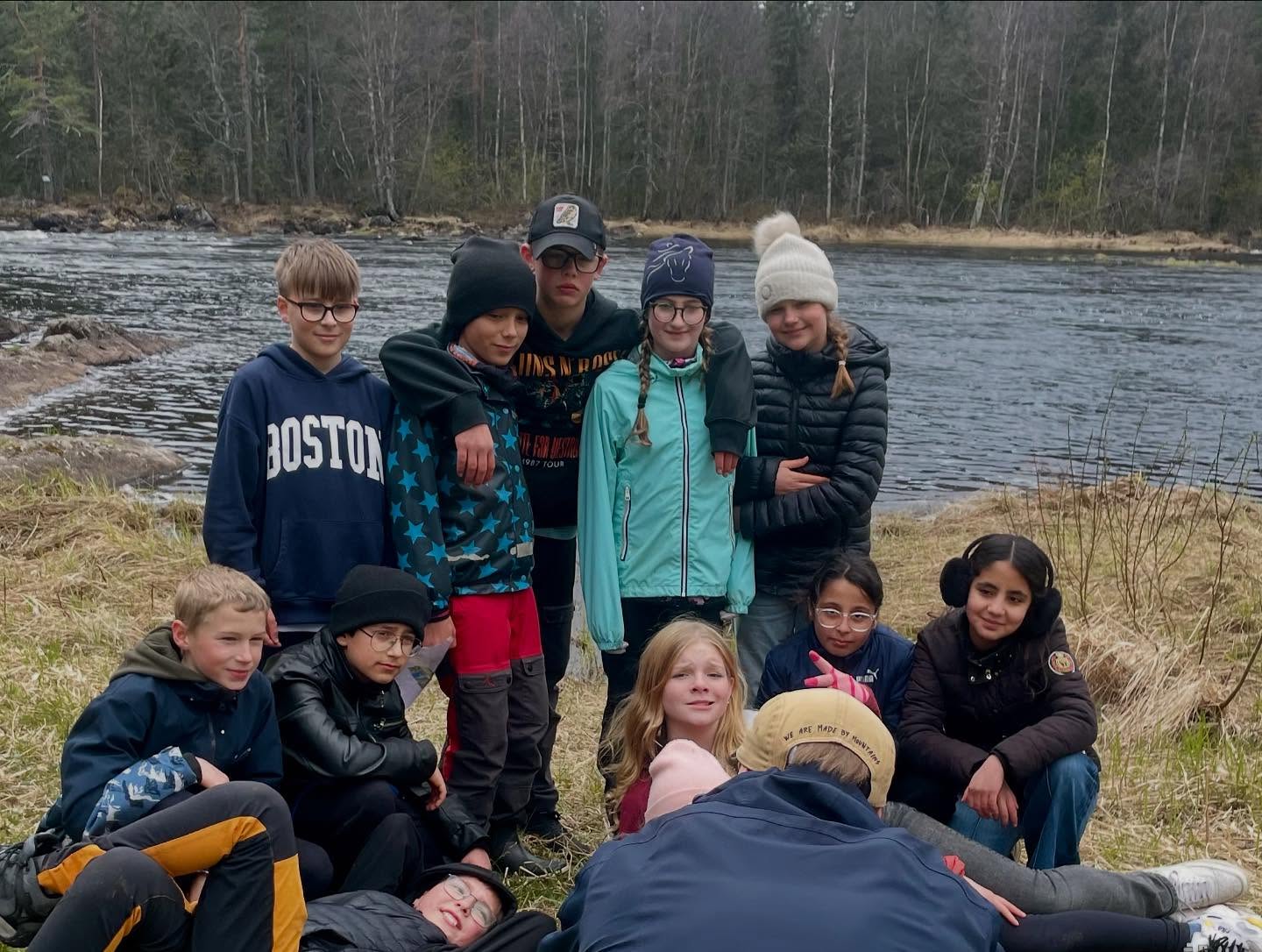
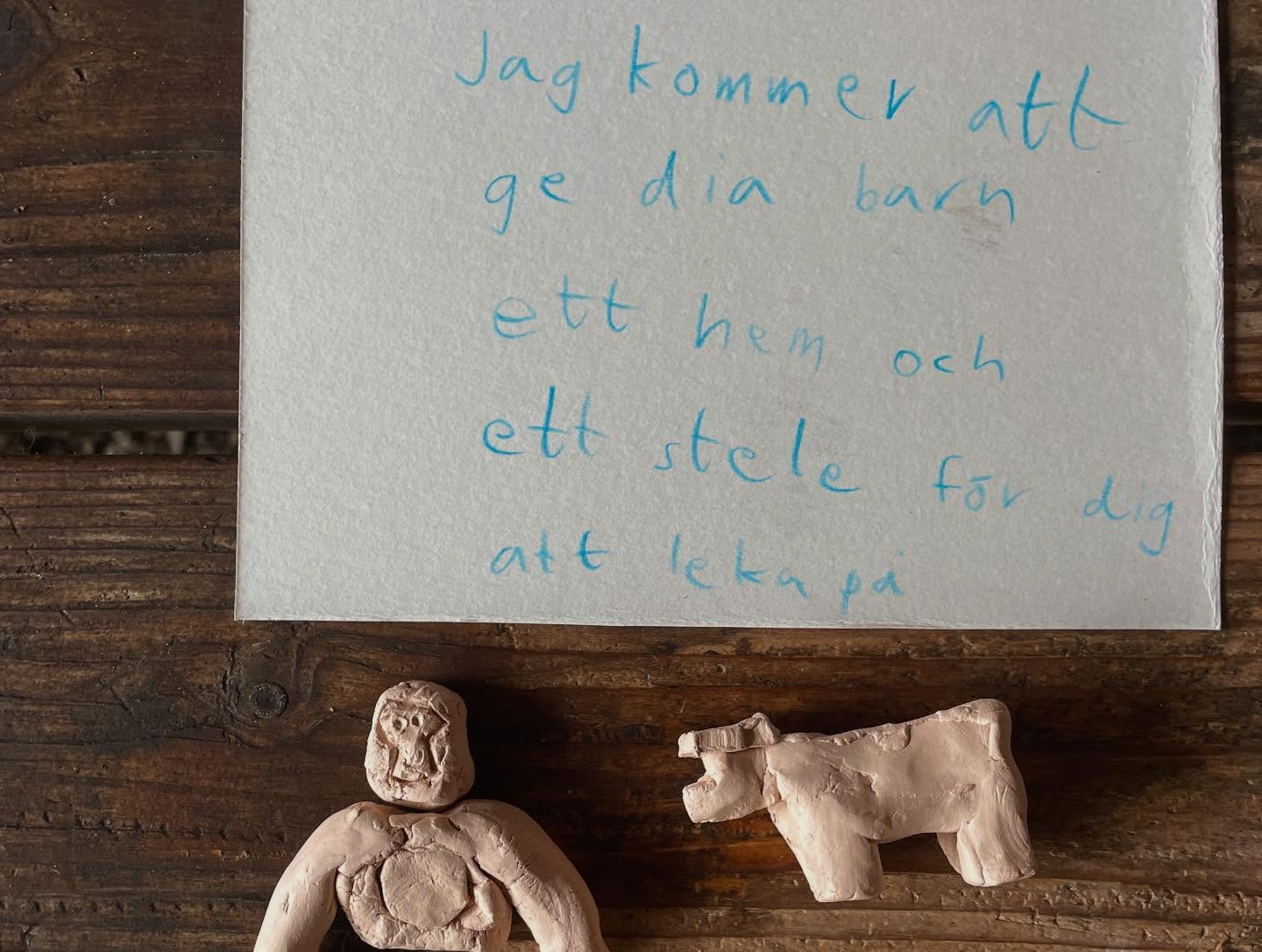
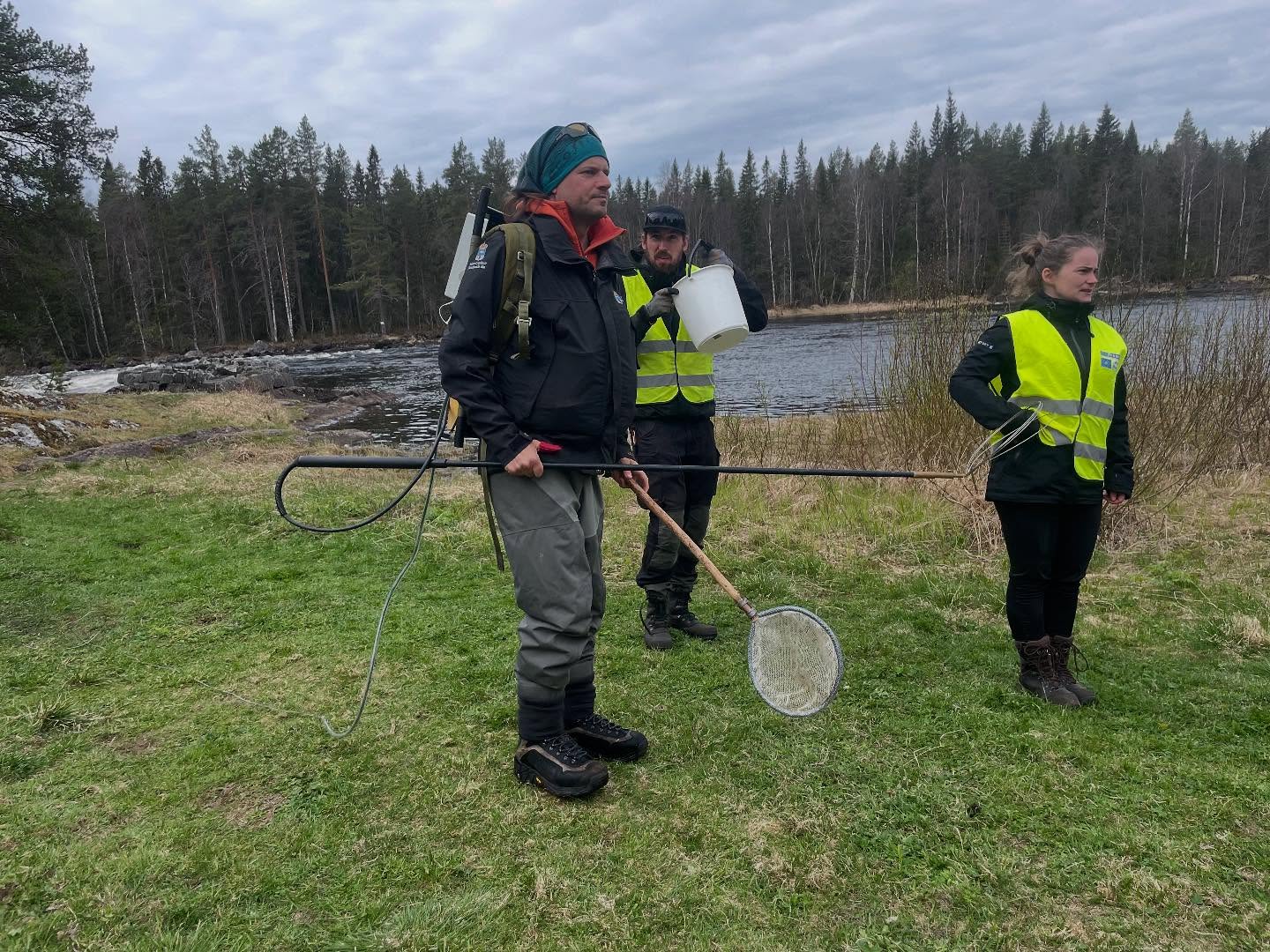
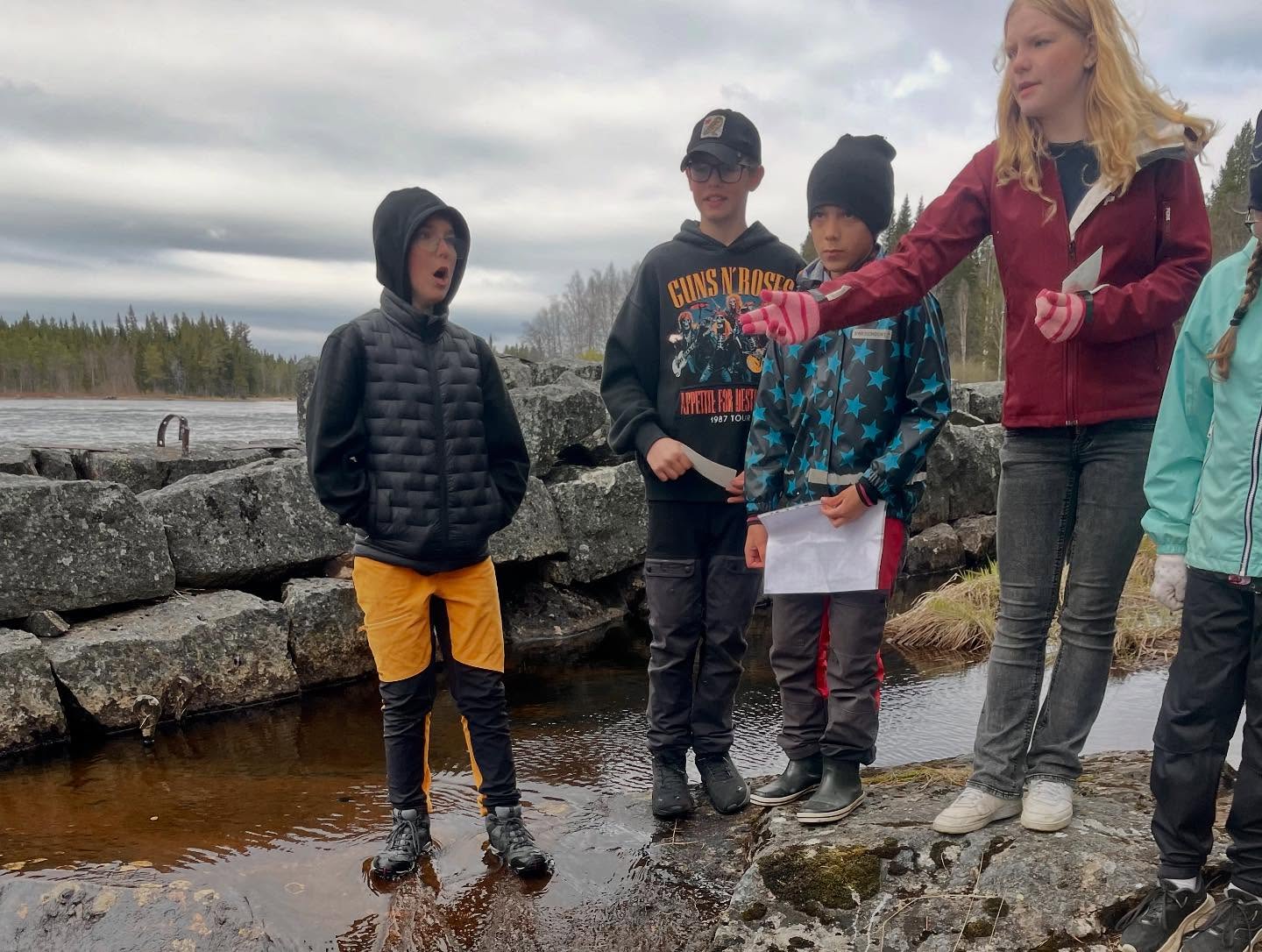
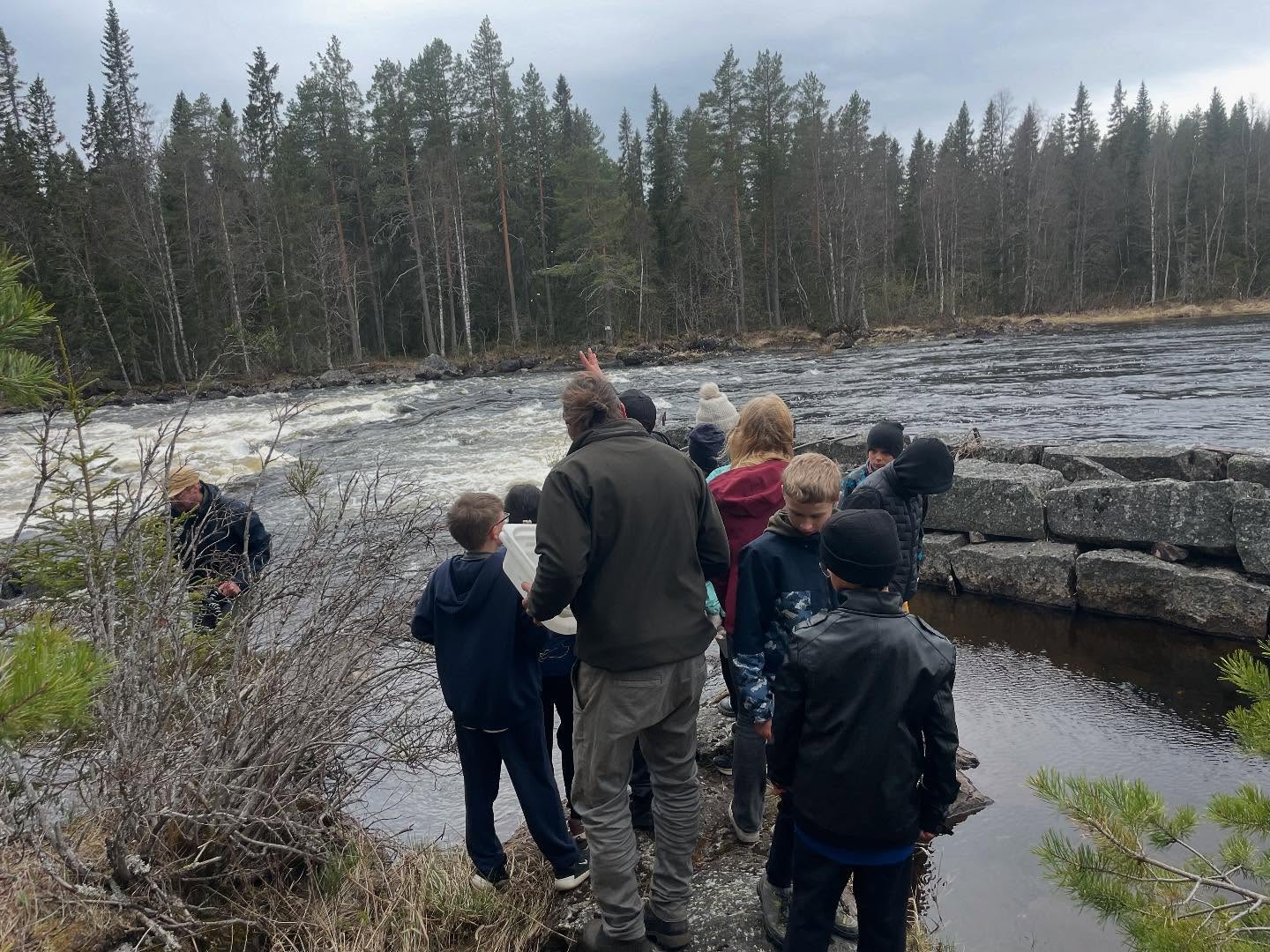
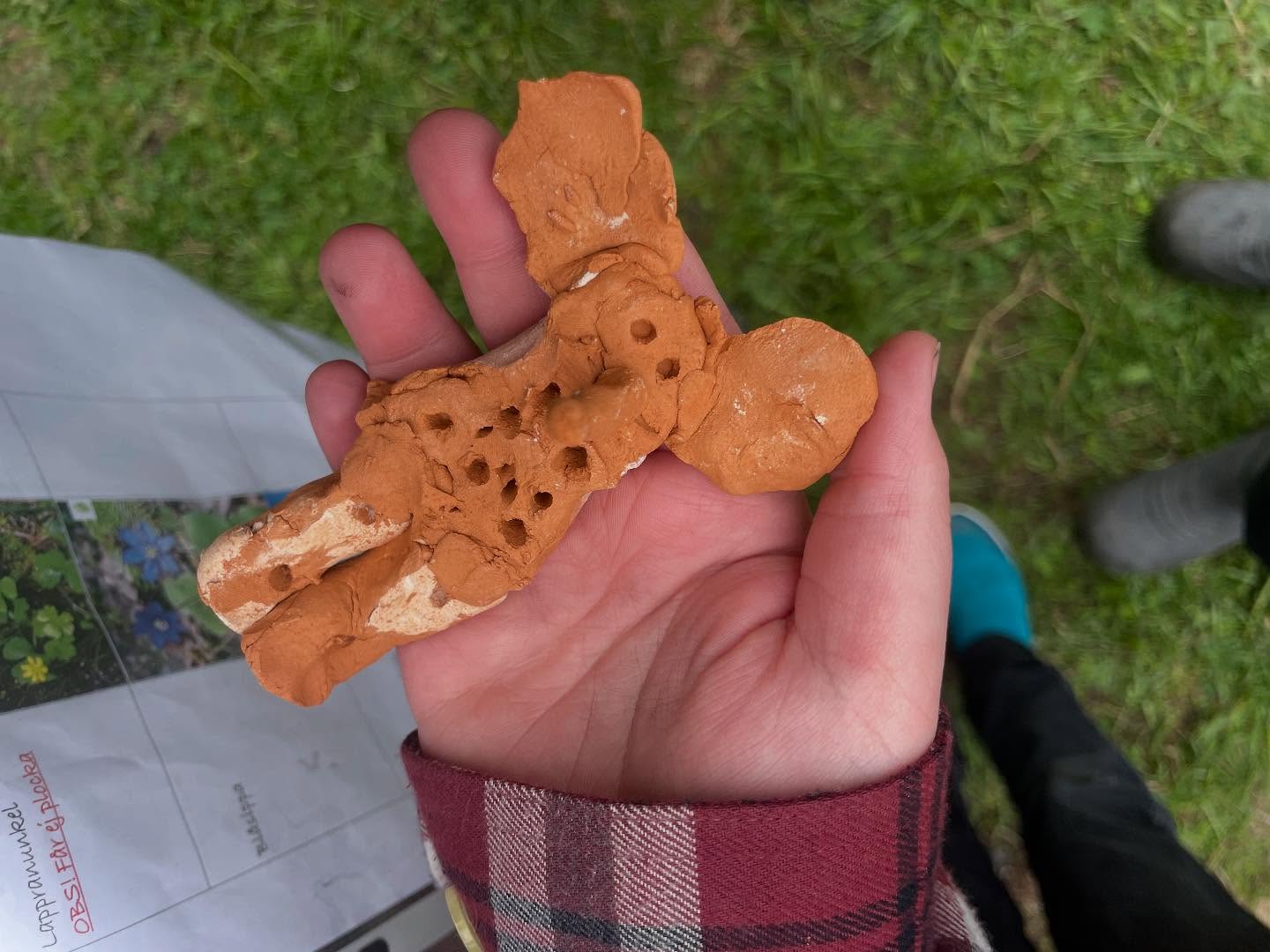
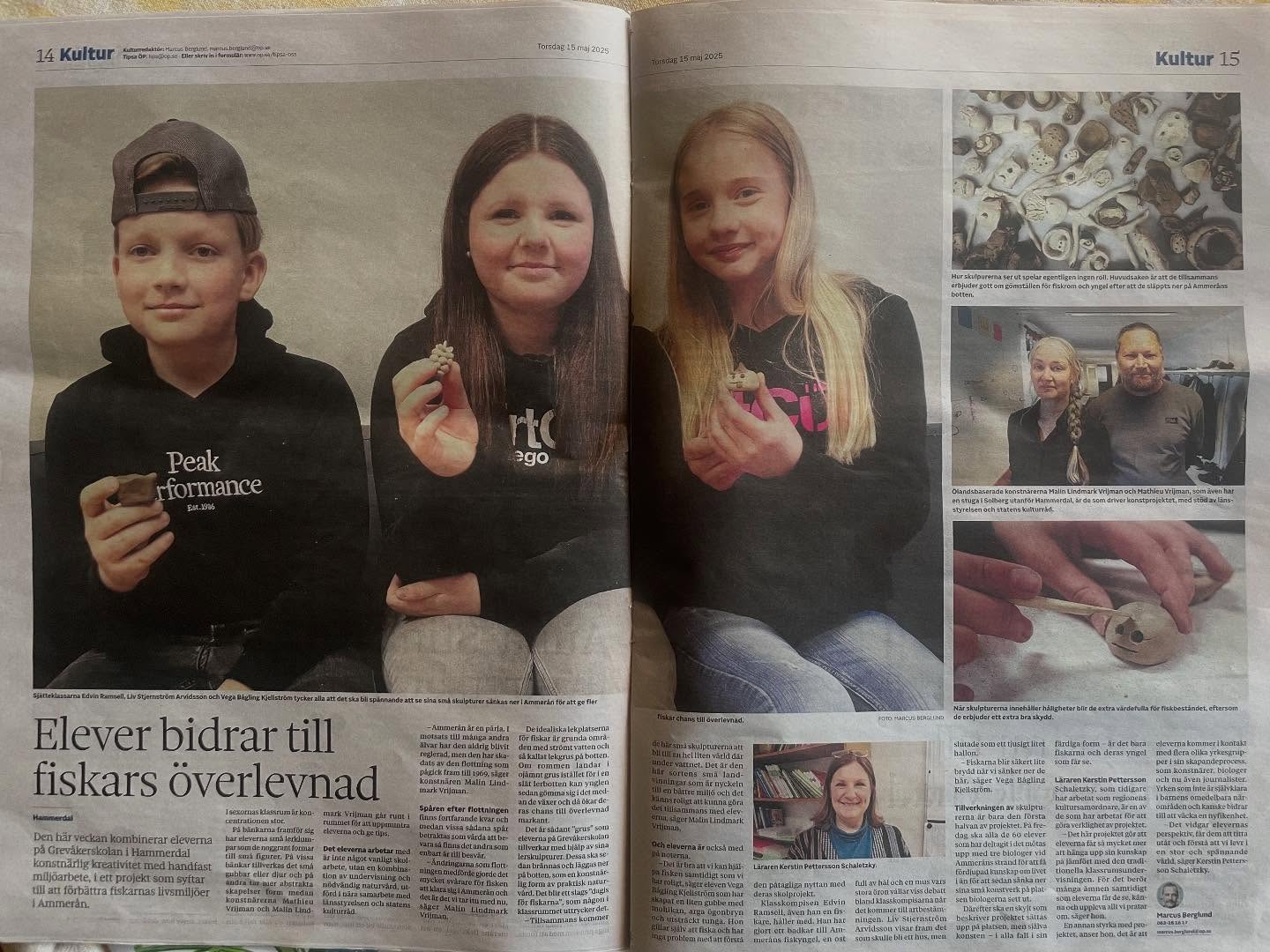
Lekgrus i Ammerån, a part of the project Other hydro powers, supported by Swedish arts grants committee. The project connect several rivers and their nearby peoples in Sweden and Canada.
In collaboration with Eco streams for life, Jämtland and Grevåkerskolan Hammerdal.
Lekgrus = spawn gravel, where in Swedish the word for spawn is the same as for play..
From an initial field trip meeting with biologists of the eco streams for life project that restores (amongst others) the river Ammerån, and their explanations to us what they are working on, we especially took with us the word Lekgrus (spawn gravel). The word inspired us to reach out to children living near the river, and together with Grevåkerskolan in Hammerdal, we could set up a collaboration around the river ecosystems, and particularly the way fish use gravel as a nursery for their young.
The school and teachers of 4 classes (60 kids) planned together with us and the biologists a week dedicated to the river in May 2025. In this week we held workshops making tiny sculptures of river clay for the spawning fish together, the children studied river eco systems, the history of rafting in the river, and the life and family making of the trout and other fish. On the last day we went out to Ammerån, and placed the Lekgrus in the river bed. The biologists from eco streams for life showed us a suitable place, and presented their work with restauration of the river. For every tiny sculpture that was lowered into the water, a greeting from the young artist to the young fish was written and drawn with watercolor. Many of them was wishing the young fish good luck, and many wished to catch and eat the fish once it was grown up. Which would be about the same time as the human kids would be young adults. Given, of course, that Ammerån still runs healthy and alive between Solbergsvattnet and Indalsälven then.f

Food systems: the design agenda
DOORS OF PERCEPTION 9 ON “JUICE”: FOOD, FUEL, DESIGN.
NEW DELHI, INDIA, 2, 3 MARCH 2007.
A unique gathering of global design experts meets in New Delhi, India, on 2, 3 March to consider solutions to the growing crisis concerning food and energy.

