M.A.R.I.N.: http://marin.cc/
facilitates research and collaboration between arts and sciences
with a focus on environmental computing and marine ecologies.
m.a.r.i.n blog: http://camp.marin.cc/
exhibition concept for summer exhibition at Århus Kunstbygning by Kultivator
Much of today’s focus is laying on what kind of future we don’t want, or are afraid of… On what we must not do, or must not have. The critical analysis of what is destructive, non sustainable systems occupies great space in relation to the creative imagination of the sustainable, pleasant and wanted ones. The desired future must be imagined in order to be possible.
To meet this need, Kultivator and Århus kunstbygning will settle the Imagine farm, for and by children. A farm is an area designated to growth and cultivation, in this case of imaginations of future systems to live.
In the basement of Århus Kunstbyggning, Kultivator will build up the Imagine farm. It will serve as a working space where desired future systems for food production, social work, energy production, waste management, housing, etc. are visualized and tested. The material for this is imagined and described by children, and represented in objects and animated film sequences by the artists and farmers of Kultivator. This translation of the children´s imagination into objects and films constitutes the first step in the settling of Imagine farm.
Step Two is the use of the farm, when visiting children (and parents) are asked to interact with the systems and rearrange them, try other ways, and document their imagined scenarios. The Imagine farm will thus be in constant change, and photos and texts of arrangements made along the way will be a growing collection of imagined futures. Here we will try to use a technology to let visitors file their photos and written comments into small animations, so that new, other films appear. Alternatively, the photos and text will be printed and made accessible to visitors in the exhibition. Or both.
Since all objects can and will be moved around, and to stress the representative character of the objects, the material we use will be papier mache´. This is a low cost, bio degradable material that is light to handle and fairly easily breaks. It is also a material and technique that is well – known for most children. No new objects will be made within the exhibition, but we will set up a repair workshop, where repairs and small adjustments can be made to the objects that are already there. To repair broken objects is another, meaningful way to interact in Imagine farm.
One event/workshop will be held, where the Imagine farm receives grown up users; preferably local politicians, or other groups that should be particularly interested in the view and interests of children for future society. The invited grown ups can take part of the information collected, and self use the farm to visualize and test thoughts.
–
What is now proved was once only imagined.
[AFG_gallery id=’31’]
Imagine farm – ground for cultivating thoughts exhibition concept for summer exhibition at Århus Kunstbygning by Kultivator Much of today's focus is laying on what kind of future we don't want, or are afraid of… On what we must not do, or must not have. The critical analysis of what is destructive, non sustainable systems occupies great space in relation to the creative imagination of the sustainable, pleasant and wanted ones. The desired future must be imagined in order to be possible. To meet this need, Kultivator and Århus kunstbygning will settle the Imagine farm, for and by children. A farm is an area designated to growth and cultivation, in this case of imaginations of future systems to live. In the basement of Århus Kunstbyggning, Kultivator will build up the Imagine farm. It will serve as a working space where desired future systems for food production, social work, energy production, waste management, housing, etc. are visualized and tested. The material for this is imagined and described by children, and represented in objects and animated film sequences by the artists and farmers of Kultivator. This translation of the children´s imagination into objects and films constitutes the first step in the settling of Imagine farm. Step Two is the use of the farm, when visiting children (and parents) are asked to interact with the systems and rearrange them, try other ways, and document their imagined scenarios. The Imagine farm will thus be in constant change, and photos and texts of arrangements made along the way will be a growing collection of imagined futures. Here we will try to use a technology to let visitors file their photos and written comments into small animations, so that new, other films appear. Alternatively, the photos and text will be printed and made accessible to visitors in the exhibition. Or both. Since all objects can and will be moved around, and to stress the representative character of the objects, the material we use will be papier mache´. This is a low cost, bio degradable material that is light to handle and fairly easily breaks. It is also a material and technique that is well – known for most children. No new objects will be made within the exhibition, but we will set up a repair workshop, where repairs and small adjustments can be made to the objects that are already there. To repair broken objects is another, meaningful way to interact in Imagine farm. One event/workshop will be held, where the Imagine farm receives grown up users; preferably local politicians, or other groups that should be particularly interested in the view and interests of children for future society. The invited grown ups can take part of the information collected, and self use the farm to visualize and test thoughts. – What is now proved was once only imagined.
YNKB (DK) – THE LEARNING SITE, (DK) & (S) – TEMPORARY SERVICES, BRETT BLOOM & BONNIE FORTUNE (US) – SARAH LEWISON (US) – KULTIVATOR (S) – NANCE KLEHM (US) – OUTDOOR LIBRARY (S) & SPECIAL GUEST: GODNATTSAGOR INIFRÅN, MALMÖ CITY LIBRARY (S)
RADICAL ART PRACTISES is a project about artists working with art practises at prisons, schools, public spaces and war zones. Radical Art Practises wants to show unusual practises used in contemporary art context, and artists directly acting in processes in societies and collaboration with ethical purposes. Artists within this field works crossover, crossing traditional borders of collaborations and professions. Radical Art Practises has a purpose to connect art practises to The Rio-convention and Agenda 21, the goals to relate artists work with collective action for a sustainable society on social/cultural, environmental and economical level.
International artist/ groups from US, Denmark and Sweden are invited to present their activities and projects. Radical Art Practices is built on participation and dialogue.
Radical Art Practises is an artist-run project by OUTDOOR LIBRARY, Christel Lundberg, in collaboration with Galleri 21, an artist run gallery.
Supported by: Statens Konstråd, Region Skåne, Malmö Stad, Roos Neon & Mediaverkstaden Skåne
. YNKB ,KIRSTEN DUFOUR & FINN THYBO ANDERSEN, (DK) For the Radical Art Practises Group Exhibition YNKB will make an presentation of the artproject “People’s Museum”, realized in Birzeit, Palestine, a village 12 km north of Ramallah from 2007 to 2009 by the two Danish art groups: Parfyme and YNKB The idea was to create a “from bottom up” museum, which represents a collection of items, histories and memories of the residents in a specific locality in Palestine. The project seeks a different approach to the concept of a museum. It is about how people want to represent themselves. For further information about Peoples Museum, Parfyme and YNKB, please see: http://www.parfyme.dk/ http://www.ynkb.dk/ THE LEARNING SITE, RIKKE LUTHER & CECILIA WENDT (DK) & (S) The Learning Site focuses on the local conditions in which its art practice is located. This entails a critical examination of the material resources and economies available within specific situations. Each situation may entail examination of economic and environmental factors, but also labor rights, property rights and the production and distribution of knowledge, which are investigated in tandem to produce a variety of different critical perspectives. http://www.learningsite.info/) LET´S RE-MAKE, BONNIE FORTUNE & BRETT BLOOM (US) Let´s Re-Make makes a presentation at Radical Art Practises of "SOMETHING HAS GOT TO GIVE: URBAN WILD HABITAT" ”As people occupy more space, waste increasing amounts of irreplaceable natural resources, animal and plant habitat diminishes and atrophies, a threat equal to or greater than climate change faces us but is not being discussed in popular debates. We are losing, or are on the verge of losing, biodiversity everywhere. While we may be able to bring carbon emissions down and eventually absorb large amounts of it, we cannot replace biodiversity. Once it collapses, and entire species disappear, the health of our home is greatly compromised and our own survival becomes less certain. This month in Bolivia, the government is voting to grant equal rights to the natural world. The same rights and protections under law that humans have. The possibility to rethink how human activity and its impact on the world can be limited exists. The legislation in Bolivia is a starting point, but more measures from legislation to design should be considered globally. We are interested in large scale conservation efforts that preserve and expand wild spaces and create continent wide animal migration corridors. We also think that the urban spaces we inhabit can be redesigned to make more space for animal habitat, particularly those that are the most endangered. This is an ongoing research project into the interaction between the built environment and animal habitat. Our drawings propose ways in which city spaces, in this instance the city of Copenhagen, could be reconfigured with animal habitats in mind.” Let’s Re-make (Info:http://www.letsremake.info/ , Brett Bloom : http://subsol.c3.hu/subsol_2/contributors0/bloombio.html Bonnie Fortune: http://www.bonniefortune.info/) SARAH LEWISON (US) For Radical Art Practises Sarah Lewison she makes a presentation of two on-going projects in Yunnan, China: ”World Heritage Beer Garden Picnic & Rough Assembly”, 2008 and ”the poetics of the oil refinery Both projects are informed by an interest in what happens in a traditionally agrarian society that is just opening up to new forms of commerce. Besides material changes, there are changes in how people relate to either other: the conditioned socialist attitudes of sharing from the years under Mao are being diluted, and indigenous "heritage" is being reproduced as a market commodity. Under the logics of neoliberal capitalism, all forms and scales of life (nature, human, wild, domesticated, neuro-cellular), are subject to domination and monetization- to becoming kinds of “property.” Using as evidence video footage and anecdotes drawn especially from ideas about how objects have relations outside of human intervention, I speculate about property as something animated and resistant. By rescaling our notions of “property” ( as has been done by corporations like Monsanto in the engineering and privatization of xgenes), might new trajectories of liberating practice appear? (Info: http://www.carbonfarm.us/) KULTIVATOR (S) Kultivator was founded in 2005 by the artists Mathieu Vrijman and Malin Lindmark Vrijman and the farmers Maria Lindmark och Henric Stigeborn. Member since 2007 is also Marlene Lindmark. Kultivator initiate and execute projects, exhibitions and workshops that explores possible alternative narratives for future development within art and farming, with the members or/and invited guests and the public. At site on Öland, Sweden, Kultivator has a residency, exhibition space and a dairy farm with 30 cows + chicken, ducks, sheep and horses. Since the start in 2005, approximately 50 artists, researchers and farmers has visited and worked on the premises. At the RAP exhibition in Galleri 21 Kultivator will show a timeline of their activities the last six years, both as artists, activists and cultural producers, and as farmers and gardeners on their farm on Öland Sweden. The two aspects of the timeline addresses issues of radical change versus change growing out slowly, of temporary, quick ideas and set ups, versus the ones that take several years to realize. (Info: www.kultivator.org) NANCE KLEHM (US) ”How we live in a city is just as much biologically determined as it is socio-culturally determined. Our cities are results of our habituation of continually disturbing soils and our non-systems thinking. These three projects: a collective humanure project Humble Pile Chicago, the bicycle powered community soil centers of The Ground Rules and my life-long practice of foraging reinterpret the importance of biological infrastructure in a city. I am a citizen, a soil maker and a weedeater. Nance Klehm (Info: http://spontaneousvegetation.net/) OUTDOOR LIBRARY (S) & (DK) OUTDOOR LIBRARY is a mobile outdoor library with documentation of art activities of national and international level. as well as an organizer of activities, filmscreenings and exhibitions with its content. OUTDOOR LIBRARY was showed first time at Pineapple @ European Social Forum, 2008.OUTDOOR LIBRARY is organized by Kontoret för Jordförbindelse (S) & (DK). At Radical Art Practises Outdoor Library makes a presentation of its content. Info: http://koloni.mediaverkstaden.org SPECIAL GUEST: GOODNIGHT STORIES FROM THE INSIDE, MALMÖ CITY LIBRARY Thousands of children in Sweden has a criminal convicted and detained mom or dad. Thousands of parents are behind prison walls and can not take part in their children's everyday lives. In the spring of 2008 started Malmö City Library project Goodnight Stories from the inside. The project is about giving parents who are in prison an opportunity to tell the bedtime stories on CD for their children. The aim is to strengthen the relationship between parent and child and reduce the negative effects that may occur in the prison. The evaluation shows that fathers have grown with the task, felt strengthened in their parenting and to become more self-confidence in reading aloud. For the kids' stories bring joy, comfort, and the presence of the absent parent. (Info: http://www.godnattsagorinifran.blogspot.com/) —————————————————————————————- Galleri 21 Malmös konstscen för nordisk och europeisk samtidskonst /Malmö´s artscene of Nordic and European contemporary art Rådmansgatan 5, 211 46 Malmö Karta/map Galleriets öppettider: torsdag 15-18 Fre – söndag 12-16 www.galleri21.com Med stöd från: Malmö stad och Statens kulturråd
. Galleri 21, Malmö RADICAL ART PRACTISES 7/5 – 29/5 2011 Välkomna på Vernissage/Opening Lördagen/Saturday den 7/5 klockan 12-16 RADICAL ART PRACTISES är ett projekt om konstnärer som arbetar med konstnärliga processer på fängelser, skolor, offentliga platser och i krigszoner och som har för avsikt att visa udda praktiker som används inom samtidens konstområden, där konstnärer fokuserar på samhällsprocesser och samarbeten med etiska syften. Bildkonstnärer inom detta fält arbetar crossover det vill säga över traditionella samarbetsgränser och professioner. Radical Art Practises har som mål att lyfta konstnärers arbete mot Rio-konventionens och Agenda 21’s idé om samverkan för ett hållbart samhälle på alla plan, socialt /kulturellt, miljömässigt och ekonomiskt. Internationella konstnärer/ grupper från USA, Danmark och Sverige bjuds in för att presentera sina projekt och verksamheter. Projektet bygger på delaktighet och dialog. Radical Art Practises är ett konstnärsdrivet projekt av OUTDOOR LIBRARY, Christel Lundberg, i samarbete med Galleri 21, ett konstnärsdrivet galleri. Med stöd av: Statens Konstråd, Region Skåne, Malmö Stad, Roos Neon & Mediaverkstaden Skåne ———————- i samband med utställningen också Radical Art Lectures: Söndagen/Sunday den 15/5 kl 12-20 föreläsningar med: YNKB, THE LEARNING SITE, BRETT BLOOM, BONNIE FORTUNE, SARAH LEWISON, KULTIVATOR & STAFFAN SCHMIDT På kvällen kl 18 Musik: Pöntinen Nästesjö Version & sedan Potluck dinner: Ta med en grönsak till soppan!/Bring av vegetable for the soup! ———————- Radical Art Lectures även: Torsdag/Thursday 19/5 kl 18-20 – Attac Malmö-Lund " En annan ekonomi är möjlig" & Torsdag/Thursday 26/5 kl 18-20 . Godnattsagor inifrån, Malmö Stadsbibliotek. ———————————— english version further down ————————————- YNKB ,KIRSTEN DUFOUR & FINN THYBO ANDERSEN, (DK) YNKB presenterar på Radical Art Practises konstprojektet “People’s Museum”, som realiserades i Birzeit, Palestina, en by som ligger 12 km norr om Ramallah mellan åren 2007 – 2009 av de två danska konstgrupperna: Parfyme and YNKB. Idén var att skapa ett “från botten och upp” museum, och representerar en samling av ting, berättelser och minnen av boende på en plats i Palestina. Projektet söker en annorlunda version av begreppet museum. Det är hur människor vill representera sig själva. För ytterligare information om Peoples Museum, Parfyme och YNKB,info: http://www.parfyme.dk/ http://www.ynkb.dk/ THE LEARNING SITE, RIKKE LUTHER & CECILIA WENDT (DK) & (S) The Learning Site fokuserar på de lokala förhållanden som råder där de utför konst. Detta innebär en kritisk undersökning av materiella resurser och ekonomier inom specifika situationer. Varje situation kan innebära granskning av ekonomiska och miljömässiga faktorer, men också arbetstagarnas rättigheter, äganderätt och produktion och fördelning av kunskap, som udnersöks tillsammans för att producera en mängd kritiska perspektiv.(Info: http://www.learningsite.info/) LET´S RE-MAKE, BONNIE FORTUNE & BRETT BLOOM (US) Let´s Re-Make visar på Radical Art Practises sitt arbete med "SOMETHING HAS GOT TO GIVE: URBAN WILD HABITAT" När människor upptar mer utrymme, avfallet ökar och mängden av oersättliga naturresurser, djur och växters livsmiljö minskar och förtvinar, är hotet lika stort eller större än det klimatförändringar som står inför oss, men diskuteras inte i populär debatter.Vi förlorar eller är på väg att förlora biologisk mångfald överallt. Även om vi kan ha en möjlighet att dra ner på koldioxidutsläppen och så småningom absorbera stora mängder av det, kan vi inte ersätta den biologiska mångfalden. När det kollapsar, och hela arter försvinner hotas vår hälsa och vår överlevnad blir allt mer osäkerDenna månad röstar regeringen i Bolivia för att ge lika rättigheter till naturen. Lika rättigheter och skydd under lagen som människan har. Det är en möjlighet att ompröva hur mänsklig aktivitet och dess inverkan på världen kan begränsas. Lagstiftningen i Bolivia är en utgångspunkt, men fler åtgärder från lagstiftning till design bör övervägas globalt.Vi är intresserade av storskaliga bevarandeinsatser som skyddar och utökar vilda platser och skapandet av migrationskorridorer med vidd över kontinenter för vilda djur. Vi anser också att de urbana rummen som vi lever i kan designas om för djurlivsmiljö, särskilt de som är mest hotade. Detta är ett pågående forskningsprojekt om interaktionen mellan byggd miljö och djurens livsmiljö. Våra ritningar är förslag till hur stadsrum, i detta fall Köpenhamn, skulle kunna förändras med djurs livsmiljö i våra tankar.” (Let’s Re-make) (Info:http://www.letsremake.info/ samt info om Brett Bloom : http://subsol.c3.hu/subsol_2/contributors0/bloombio.htmloch Bonnie Fortune: http://www.bonniefortune.info/) SARAH LEWISON (US) Sarah Lewison presenterar på Radical Art Practises två pågående projekt i Yunnan, Kina: ”World Heritage Beer Garden Picnic & Rough Assembly; the poetics of the oil refinery encountering the poets of the bamboo grove”, 2008- & "the poetics of the oil refinery encountering the poets of the bamboo grove" (work in progress). Båda projekten ger en bild av vad som sker när ett traditionellt jordbrukssamhälle öppnar sig för nya former av handel. Utöver materiella förändringar, sker det skiften i hur människor relaterar sig till varandra: tidigare socialistiska attityder om det kollektiva från tiden under Mao skingras, och det gemensamma ”arvet” återges som handelsvara. Enligt neo-liberal kapitalism, är alla former och storlekar i livet (naturen, människan, vilda, tama), är föremål för dominans och omvandling till penningvärde – för att bli typer av ”egendom”. Genom att använda videoupptagningar och anekdoter särskilt om hur föremål har relationer utanför mänsklig inblandning, är det en spekulation om hur egendom som något levande och motståndskraftigt. Genom att skala om våra föreställningar om ”egendom” (som har gjorts av företag som Monsanto inom verkstadsindustrin och privatiseringen av xgenes) kan nya rörelser av frigörande praktiker uppstå. (Info: http://www.carbonfarm.us/) KULTIVATOR (S) Kultivator grundades 2005 av konstnärerna Mathieu Vrijman och Malin Lindmark Vrijman tillsammans med jordbrukarna Maria Lindmark och Henric Stigeborn. Medlem sedan 2007 är också Marlene Lindmark. Kultivator startar och utför and projekt, utställningar och workshops som utforskar möjliga alternativa berättelser för framtida utveckling inom konst och jordbruk, med medlemmar eller/och inviterade gäster och allmänheten. Kultivator har sin hemvist och utställningsrum på Öland och mjölkgård med 30 kor + kyckling, ankor, får och hästar. Sedan starten 2005 har cirka 50 konstnärer, forskare och bönder besökt och arbetat i lokalerna. På Radical Art Practises visar Kultivator en tidslinje över de sex senaste årens verksamhet, som konstnärer, aktivister och kulturproducenter, men också som jordbrukare och trädgårdsmästare på gården på Öland. De två aspekterna av tidslinjen behandlar frågor om radikal förändring kontra förändring, som växer långsamt fram, de snabba, spontana idéerna och genomföranden, versus de som tar flera år att förverkliga. (Info: www.kultivator.org) NANCE KLEHM (US) ”Hur vi lever i stan är lika mycket biologiskt förutbestämt som det är socio-kulturellt determinerat. Våra städer är ett resultat av våra vana att konstant störa jorden och av vårt icke systemtänkande. Nance Klehm presenterar 3 projekt på Radical Art Practises: ett kollektivt: a collective kompostprojekt Humble Pile Chicago, utvinning av energi i cykeldrivna jord centrat The Ground Rules och min livslånga praktik att omtolka vikten av biologisk infrastruktur i staden. Jag är en medborgare, en jordtillverkare och en ogräsätare.” (Info: http://spontaneousvegetation.net/) OUTDOOR LIBRARY (S) & (DK) OUTDOOR LIBRARY är ett mobilt utomhusbibliotek med en ständigt växande dokumentation av konstaktiviteter på nationellt och internationellt plan, som också organiserar aktiviteter, filmvisningar och utställningar med sitt innehåll. Öppnade på Pineapple @ European Social Forum, 2008. På Radical Art Practises visar Outdoor Library sitt innehåll. (Info: http://koloni.mediaverkstaden.org) SPECIELL GÄST: GODNATTSAGOR INIFRÅN, STADSBIBLIOTEKET I MALMÖ (S) Tusentals barn i Sverige har en brottsdömd och frihetsberövad mamma eller pappa. Tusentals föräldrar befinner sig bakom fängelsemurarna och kan inte ta del av sina barns vardag. Våren 2008 startade Malmö Stadsbibliotek projektet Godnattsagor inifrån. Projektet handlar om att ge föräldrar som sitter i fängelse möjlighet att tala in godnattsagor på cd till sina barn. Syftet är att stärka relationen mellan barn och förälder och minska de negativa effekter som kan uppstå i och med fängelsetiden. Utvärderingen visar att papporna vuxit med uppgiften, känt sig stärkta i sitt föräldraskap och fått ett större självförtroende när det gäller att läsa högt. För barnen har sagorna skänkt glädje, tröst och närvaro av den frånvarande föräldern. (Info: http://www.godnattsagorinifran.blogspot.com/
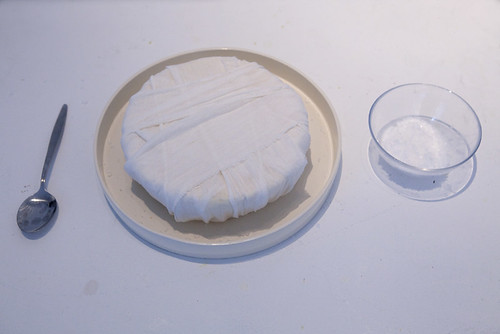
A Cross cultural Nomadic Cheese in our boot at Supermarket. 10 litre of milk will be brought from Kultivators farm om Öland, and during the art fair it will be processed into à cheese. This cheese is the second one in à series of cheese made in cultural institutions. Micro cultures in the non- pasteurised milk from the farm will react and developed together with the collective cultures from artist – run gallery's and the great culture of Stockholms Kulturhuset, for à cheese with strong and complex taste.
An opinionresearch.
This installation examines the popularity of statements from the manifest of the European Arts and Agriculture network, agri-culture.eu. This network was established in connection to Kultivators “Wedding between Art and Agriculture” in July 2010, and officially launched at he international conference “Campo Adentro”, in Madrid later the same year.
The conference lasted for five days (from October 20 to 24, closure day) during which there was an exchange of experiences and points of view with the aim of strengthening and cross-linking networks working on the relationship between culture, territory and society.
200 participants, 35 experts and speakers, and 5 institutions took part in the 5-day conference.
It provided a space for reflection and transmission of information: the status of the rural question, recent theoretical research on art and landscape and the practice of contemporary artistic interventions in relation to the rural… by incorporating different disciplines such as rural sociology, social psychology, eco-design, demography, agricultural policy theory, etc. We will also have the testimonies of people from the countryside, as valuable as any other well-established knowledge. The presentations will be expanded through round-table meetings to encourage public participation, as well as specific working groups. The target audience will be diverse but with a common interest in exploring this new area of thought and action: artists and art students, cultural agents, curators and art critics, professors of various disciplines, rural sociologists, rural development workers, politicians, etc.
The Campo Adentro International Conference was organized in collaboration with the Museo de Arte Reina Sofia, where it took place for the most part. At the same time, various activities took place in other venues at different cultural institutions around the city. You can find more detailed information in the program, downloadable in pdf.
Kultivator residency in Rum 46 Århus, Denmark
18th of October until 31st of October 2010
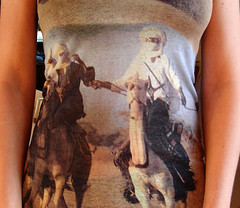
Most authorities consider that cheese was first made in the Middle East. The earliest type was a form of sour milk which came into being when it was discovered that domesticated animals could be milked. A legendary story has it that cheese was ‘discovered’ by an unknown Arab nomad. He is said to have filled a saddlebag with milk to sustain him on a journey across the desert by horse. After several hours riding he stopped to quench his thirst, only to find that the milk had separated into a pale watery liquid and solid white lumps. Because the saddlebag, which was made from the stomach of a young animal, contained a coagulating enzyme known as rennin, the milk had been effectively separated into curds and whey by the combination of the rennin, the hot sun and the galloping motions of the horse. The nomad, unconcerned with technical details, found the whey drinkable and the curds edible. Widcome, Richard. The Cheese Book. Seacaucus: Chartwell Books, 1978.
Making a Crosscultural Nomadic Cheese with Swedish/Danish culture, ripening into the meeting with our friends from the middle east.
Plan:
Kultivator will travel to Århus with milk from the farm.
15 – 18 October 2010
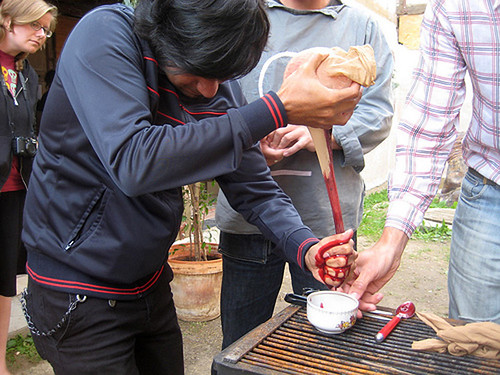
The milk comes from Kultivators farm and straight from the cows with no pasteurizing, which means that the culture of the farms surrounding is still in this milk. This bacteria micro culture and the conditions of the travel (heat from car engine, time (estimated 7 hours) and shaking from driving) will start the transformation of the milk into cheese. In the gallery Rum 46 in Denmark the cheese mass will be infused with danish culture, creating the Crosscultural Nomadic Cheese.
Kultivator arrives 15 of October, and will work on salting, pressing and shaping the CNC in the galleryspace until the 18:th of October. A workshop/Drawing session will be held in connection with this. The CNC will ripe in the gallery until end October, and then be be tasted. Parts of it would then be preserved until next year June, when Camp project starts, and possibly parts of this cheese could infuse milk brought from the middle east.
Workshop: Visualize your nomadic life (appr. 2 hours, Saturday or Sunday)
Drawing session with public. Drawings will be left exhibited in gallery during the ripening period of the Crosscultural Nomadic Cheese.
Suggestion for duration of exhibition is two – three weeks, after which the cheese should be ready for consuming. After this an event could be for public to taste the Crosscultural Nomadic Cheese in the end of October/begin November?
A building on further connecting over to the Camp in 2011, would be the traveling of milk from the middle east, via the gallery in Århus to the farm of Kultivator?
The International Gallery18 September – 2 October
Liverpool Biennial 2010
Curated by James Brady and Janette Porter (http://www.hightideuk.org/)
Ditch it
Environmental activism by play, art, and small and large animals, coordinated by Swedish art and agriculture initiative Kultivator.
Kultivator is located on a flat limestone island that lacks natural rivers. Instead, there are man made ditches, that already since century’s are leading water away from the island to the sea, to create more ground for cultivation and pastures. This has resulted in more land for people to feed on, but is also causing serious problems in the Baltic sea. The ditches carry the water quickly out, bringing with it nutrients leaking out from fertilized fields. This overfeeding of the sea results in an overproduction of algae, and dying seabeds due to lack of oxygen.
Already since years, commercial fishing outside the coast of the island has ceased, and the beaches clog of rotting or poisonous algae, making it hard to play in the shallow water. In the inland the plants and animals living in small freshwater pools and swamps has less and less space to live and breed. The process is a matter of both time and space. If the fresh water is contained and stays on the island longer, microorganisms and larger animals and plants can process the nutrients in the water. If a little bit of land/space is given back to the wetlands, more can eventually be used in the sea. This is a well known fact, but due to slow bureaucratic procedures and land owner issues little happens on a large scale. Time and nutrients passes…
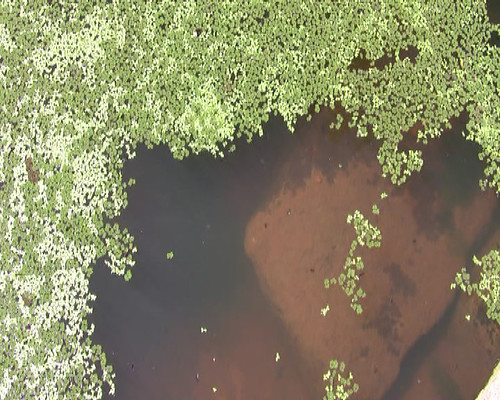
In May 2010, Kultivator dug a pool next to one of these ditches. The water from the ditch was led into the pool and kept there. Water, plants and animals from natural pools was added to it, and a solar powered pump installed to give oxygen. In a small pool like this, it is beneficial if the water is sometimes stirred, what ducks and larger animals normally would do. Unfortunately, no wild ducks introduced themselves, so the village kids, with their remote control boat, some plastic toys and their dog would do that work during the summer. Meanwhile, under the surface, more and more microorganisms established themselves. Dragon flies appeared over the pool. Five freshwater mussels was put in, and to make it possible for them to reproduce, three goldfish were introduced. After a few weeks, shoals of small fish appeared. Probably the offspring of the goldfish. As a result of a project from a visiting artist the Asian water ferm Azolla was added, that can double its biomass in two days, under ideal conditions. It did. The Azolla was harvested to be used as green fertilizer on the raised beds of Kultivator, and fed to chickens and pigs. The pool is now containing salamanders, goldfish, frogs, bugs, worms, barbie dolls, some sunken ship and mussels and all these other little things we don’t know the name of. It also contained and processed nutrients that all this lived from during the five months it existed. The sea never even knew.
. The International Gallery18 September – 2 October Liverpool Biennial 2010 Curated by James Brady and Janette Porter (http://www.hightideuk.org/) Ditch it Environmental activism by play, art, and small and large animals, coordinated by Swedish art and agriculture initiative Kultivator. Kultivator is located on a flat limestone island that lacks natural rivers. Instead, there are man made ditches, that already since century's are leading water away from the island to the sea, to create more ground for cultivation and pastures. This has resulted in more land for people to feed on, but is also causing serious problems in the Baltic sea. The ditches carry the water quickly out, bringing with it nutrients leaking out from fertilized fields. This overfeeding of the sea results in an overproduction of algae, and dying seabeds due to lack of oxygen. Already since years, commercial fishing outside the coast of the island has ceased, and the beaches clog of rotting or poisonous algae, making it hard to play in the shallow water. In the inland the plants and animals living in small freshwater pools and swamps has less and less space to live and breed. The process is a matter of both time and space. If the fresh water is contained and stays on the island longer, microorganisms and larger animals and plants can process the nutrients in the water. If a little bit of land/space is given back to the wetlands, more can eventually be used in the sea. This is a well known fact, but due to slow bureaucratic procedures and land owner issues little happens on a large scale. Time and nutrients passes… In May 2010, Kultivator dug a pool next to one of these ditches. The water from the ditch was led into the pool and kept there. Water, plants and animals from natural pools was added to it, and a solar powered pump installed to give oxygen. In a small pool like this, it is beneficial if the water is sometimes stirred, what ducks and larger animals normally would do. Unfortunately, no wild ducks introduced themselves, so the village kids, with their remote control boat, some plastic toys and their dog would do that work during the summer. Meanwhile, under the surface, more and more microorganisms established themselves. Dragon flies appeared over the pool. Five freshwater mussels was put in, and to make it possible for them to reproduce, three goldfish were introduced. After a few weeks, shoals of small fish appeared. Probably the offspring of the goldfish. As a result of a project from a visiting artist the Asian water ferm Azolla was added, that can double its biomass in two days, under ideal conditions. It did. The Azolla was harvested to be used as green fertilizer on the raised beds of Kultivator, and fed to chickens and pigs. The pool is now containing salamanders, goldfish, frogs, bugs, worms, barbie dolls, some sunken ship and mussels and all these other little things we don't know the name of. It also contained and processed nutrients that all this lived from during the five months it existed. The sea never even knew.
The Wedding Between Art and Agriculture, in Dyestad, Öland
22 – 24th July 2010
Two ancient human activities will solemnly marry during a three-day wedding in the farm of Kultivator on Öland, Sweden, in this summer. The first two days involve a group of 20 especially invited people that work with the preparations. The last day, 24th July, the public is welcome to attend the ceremony and participate in the celebration that precedes and follows ..
Art and Agriculture will be put together, asked to condition themselves to each other and with the marriage go into a steady relationship. Cultural involvement in the development of future systems for food production is not about using a few creative minds to improve details of the whole. It is about making food production and farming a part of public awareness and knowledge. It is about sharing and discussing necessary decisions for the future openly and commonly. It is about enabling people to take active part in building systems and processing experience – through art + agriculture.
For five years, the experimental platform Kultivator has initiated, attended to- and executed projects that examines the context and cross-fertilization between agriculture and art. In these often international activities Kultivator have encountered a growing number of organizations and individuals involved in this field. A selected group of those are now gathering on the farm in Dyestad. They will during two days jointly prepare a suitable ritual, festivity and discussion topics fitting this historical association. The wedding is a transparent, public manifestation, but also the formal creation of a network between related organizations and individuals. The wedding has been prepared during a three month long exhibition in Kalmar art museum, and a review (in Swedish) can be read here:
Organizations participating in Dyestad are:
Plataforma Rural, Fernando Garcia, SP
My Villages, Wapke Feenstra, http://www.myvillages.org NL / D
Serde, Signe Pucena, Ugis Pucena, http://www.serde.lv/ LV
Grizedale Arts, Adam Sutherland, http://www.grizedale.org/ UK
The Australian A & A ACRE Network, Ian Tully, AU
Hesta farm, Oloph Fritzen http://www.4hlantbruk.se/documents/gard.html SE
Kalmar Art Museum, Inger Stjerna http://www.kalmarkonstmuseum.se/ SE
Fiona Woods, http://www.fionawoods.net/ IR
Louise Lövmo, People’s University, http://www.folkuniversitetet.se/ SE
Helle Kvamme, Yellowbox http://www.hellekvamme.se/yellowbox. SE
Gijs Frieling, http://www.gijsfrieling.nl/ NL
Andrew Paterson, SCO http://agryfp.info/ / FI
Erik Sjödin, http://eriksjodin.net/ SE
Benn Sena da Silva, DK
Randy Albright, U.S. / P
Thomas Bagge, DK
Mia Sloth Moller, DK
Those invited will include wedding speech, in which they formulate the possible opportunities and challenges this new relationship is facing. They will also in consultation with Kultivator design ceremony itself, which is therefore up to the date itself is unknown. We will during the day, before the ceremony, have workshops in: Vodka production in Latvian style, Cook and taste the future of fast food, Sketch out a dream farm, and also have talk sessions with the invited organizations. The International village shop by My Villages and Wapke Feenstra also opens up in our farm shop.
Brief information about the artists who have done special work to the wedding:
Gijs Frieling, NL (director W139, winner of the Prix de Rome, an associate professor at Rijksacademie Amsterdam, etc, etc) in Falu red mural of a purpose-built outdoor kitchen to the wedding.
Benn Sena da Silva, DK (utb. Warsaw Academy of Fine Arts, Rietveld Academy) One of the farm’s tractors painted in Delft blue porcelain.
Andrew Paterson, SCO (Andrew Paterson Gryf artist-organizing, Educator, Cultural producer, and independent researcher, based in Helsinki, Finland.) Clipkino Events Art and Agriculture.
Fiona Woods infrared (MA Art in the Contemporary World NCAD Dublin, Ireland) Showing and working on collaborative trans-european network for local production.
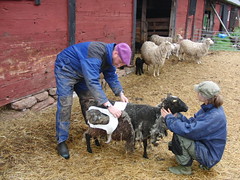
Michel Bussien SE “Sheep Lawn Mower” an application for Sheep.
Mathieu Vrijman GB / NL (founder Kultivator, Rietveld Academy) work on the show and the work “Camp” that will entertain the wedding guests, discussion groups and audiences in the wedding, and rebuilt as a remake of the camp from the television series MASH.
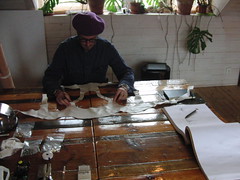
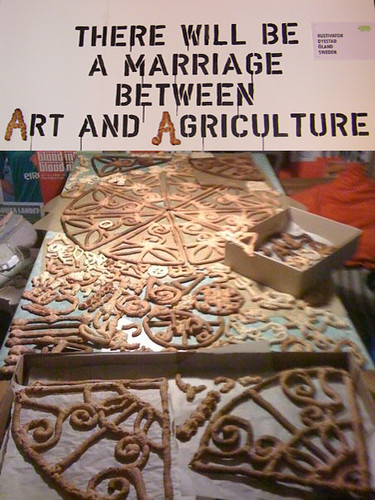
Marlene Lindmark SE (State Kunsthöyskole, Oslo) Make a dinner set for the wedding dinner with ornaments of over 200 parts second hand china.
Wapke Feenstra, NL; My Villages, shows “The international village shop with
Erik Sjödin SE. Shows his work “Super Meal” that is centered around growing, eating and cooking the super plant Azolla, also shown at Färgfabriken summer of 2010.
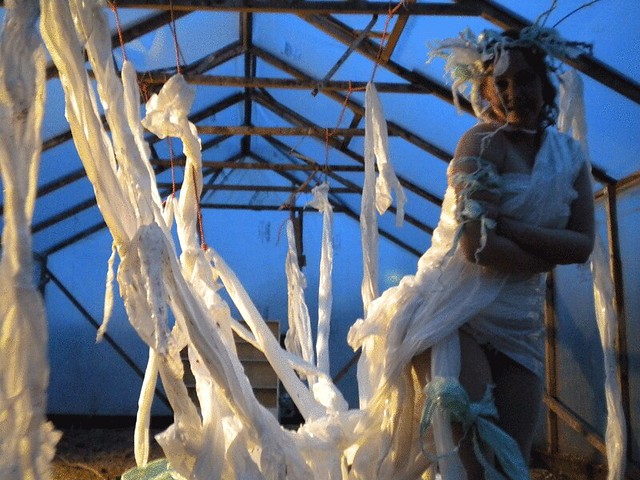
Sisters of Sättra SE Radical sewing circles, Öland; draft before the wedding dress of silage plastic.
Ingegerd Peterson, Loom with barbed wire
Programme:
12:00 arrival, exhibition of participating organizations and the display of custom artwork., Opening of the International Village shop.
13:00 to 14:00 time for lunch.
14:00 to 17:00 p.m. Workshop floral decoration for the young, Visualize your farm with Wapke Feenstra, vodka workshop with Serde from Latvia, Workshop “Super Meal” by Erik Sjödin, the cooking of Azolla. Group discussions / conversations with the audience, children’s activity continued.
17:00 to 18:00 ceremony / MARRIAGE CEREMONY with procession
18:00 to 20:00 Dinner with speakers, 10 + slide shows
21:00 Clipkino event Art and Agriculture, by Andrew Paterson
22:00 – Live Band Darya and the Moonlight Orchestra, VJ Art and Agriculture.
The wedding is to consolidate Kultivator as a place for the development of ideas and discussions on strategies for regional survival of art + agriculture as the base. We aim to continue our local and international discussion on future solutions from an artistic, economic and ecological point of view. We create with the wedding of a further foundation for our further activities on site at Öland.
www.kultivator.org
The wedding is implemented with the support of: The future of culture, The People’s University, The Regional Association of Kalmar and LRF
[AFG_gallery id=’24’]
.......
. The Wedding Between Art and Agriculture, in Dyestad, Öland 22 – 24th July 2010 Two ancient human activities will solemnly marry during a three-day wedding in the farm of Kultivator on Öland, Sweden, in this summer. The first two days involve a group of 20 especially invited people that work with the preparations. The last day, 24th July, the public is welcome to attend the ceremony and participate in the celebration that precedes and follows .. Art and Agriculture will be put together, asked to condition themselves to each other and with the marriage go into a steady relationship. Cultural involvement in the development of future systems for food production is not about using a few creative minds to improve details of the whole. It is about making food production and farming a part of public awareness and knowledge. It is about sharing and discussing necessary decisions for the future openly and commonly. It is about enabling people to take active part in building systems and processing experience – through art + agriculture. For five years, the experimental platform Kultivator has initiated, attended to- and executed projects that examines the context and cross-fertilization between agriculture and art. In these often international activities Kultivator have encountered a growing number of organizations and individuals involved in this field. A selected group of those are now gathering on the farm in Dyestad. They will during two days jointly prepare a suitable ritual, festivity and discussion topics fitting this historical association. The wedding is a transparent, public manifestation, but also the formal creation of a network between related organizations and individuals. The wedding has been prepared during a three month long exhibition in Kalmar art museum, and a review (in Swedish) can be read here: http://lh3.ggpht.com/_W63dWK-DVUA/TA3zlNktJVI/AAAAAAAABa8/C-HjYIL2QpM/dn.jpg Organizations participating in Dyestad are: Plataforma Rural, Fernando Garcia, SP My Villages, Wapke Feenstra, http://www.myvillages.org NL / D Serde, Signe Pucena, Ugis Pucena, http://www.serde.lv/ LV Grizedale Arts, Adam Sutherland, http://www.grizedale.org/ UK The Australian A & A ACRE Network, Ian Tully, AU Hesta farm, Oloph Fritzen http://www.4hlantbruk.se/documents/gard.html SE Kalmar Art Museum, Inger Stjerna http://www.kalmarkonstmuseum.se/ SE Fiona Woods, http://www.fionawoods.net/ IR Louise Lövmo, People's University, http://www.folkuniversitetet.se/ SE Helle Kvamme, Yellowbox http://www.hellekvamme.se/yellowbox. SE Gijs Frieling, http://www.gijsfrieling.nl/ NL Andrew Paterson, SCO http://agryfp.info/ / FI Erik Sjödin, http://eriksjodin.net/ SE Benn Sena da Silva, DK Randy Albright, U.S. / P Thomas Bagge, DK Mia Sloth Moller, DK Those invited will include wedding speech, in which they formulate the possible opportunities and challenges this new relationship is facing. They will also in consultation with Kultivator design ceremony itself, which is therefore up to the date itself is unknown. We will during the day, before the ceremony, have workshops in: Vodka production in Latvian style, Cook and taste the future of fast food, Sketch out a dream farm, and also have talk sessions with the invited organizations. The International village shop by My Villages and Wapke Feenstra also opens up in our farm shop. Brief information about the artists who have done special work to the wedding: Gijs Frieling, NL (director W139, winner of the Prix de Rome, an associate professor at Rijksacademie Amsterdam, etc, etc) in Falu red mural of a purpose-built outdoor kitchen to the wedding. Benn Sena da Silva, DK (utb. Warsaw Academy of Fine Arts, Rietveld Academy) One of the farm's tractors painted in Delft blue porcelain. Andrew Paterson, SCO (Andrew Paterson Gryf artist-organizing, Educator, Cultural producer, and independent researcher, based in Helsinki, Finland.) Clipkino Events Art and Agriculture. Fiona Woods infrared (MA Art in the Contemporary World NCAD Dublin, Ireland) Showing and working on collaborative trans-european network for local production. Michel Bussien SE “Sheep Lawn Mower" an application for Sheep. Mathieu Vrijman GB / NL (founder Kultivator, Rietveld Academy) work on the show and the work "Camp" that will entertain the wedding guests, discussion groups and audiences in the wedding, and rebuilt as a remake of the camp from the television series MASH. Marlene Lindmark SE (State Kunsthöyskole, Oslo) Make a dinner set for the wedding dinner with ornaments of over 200 parts second hand china. Wapke Feenstra, NL; My Villages, shows "The international village shop with Erik Sjödin SE. Shows his work "Super Meal" that is centered around growing, eating and cooking the super plant Azolla, also shown at Färgfabriken summer of 2010. Sisters of Sättra SE Radical sewing circles, Öland; draft before the wedding dress of silage plastic. Ingegerd Peterson, Loom with barbed wire Programme: 12:00 arrival, exhibition of participating organizations and the display of custom artwork., Opening of the International Village shop. 13:00 to 14:00 time for lunch. 14:00 to 17:00 p.m. Workshop floral decoration for the young, Visualize your farm with Wapke Feenstra, vodka workshop with Serde from Latvia, Workshop "Super Meal" by Erik Sjödin, the cooking of Azolla. Group discussions / conversations with the audience, children's activity continued. 17:00 to 18:00 ceremony / MARRIAGE CEREMONY with procession 18:00 to 20:00 Dinner with speakers, 10 + slide shows 21:00 Clipkino event Art and Agriculture, by Andrew Paterson 22:00 – Live Band Darya and the Moonlight Orchestra, VJ Art and Agriculture. The wedding is to consolidate Kultivator as a place for the development of ideas and discussions on strategies for regional survival of art + agriculture as the base. We aim to continue our local and international discussion on future solutions from an artistic, economic and ecological point of view. We create with the wedding of a further foundation for our further activities on site at Öland. www.kultivator.org The wedding is implemented with the support of: The future of culture, The People's University, The Regional Association of Kalmar and LRF
(Dansk version findes her: http://vimeo.com/25896527)
The Wedding Between Art & Agriculture, 2011. (Full version, 39 min).
A documentary about KULTIVATOR, an experimental cooperation of organic farming and visual art practice, situated in rural village Dyestad, on the island of Öland, Sweden.
In the summer of 2010 Kultivator initiated The Wedding Between Art and Agriculture, an artist conference and public ceremony which intended to unite the two ancient activities. The film shows the preparation process before the wedding ceremony – with flashbacks to a variety of agricultural and social projects that Kultivator have initiated, and thus gives a glimpse into the experimental and idealistic world of Kultivator.
Several languages spoken. English subtitles.
Information about Kultivator: https://kultivator.org/
02:29 Interview with Malin Lindmark Vrijman & Mathieu Vrijman: The beginning of Kultivator.
04:22 Tractor Ballet 2004.
05:17 Wedding participants first meeting.
07:29 Interview: The countryside.
08:46 Dinner with the Cows 2005.
09:33 Interview: Art and Agriculture.
13:36 Interview: Kultivator as an artist group.
15:40 Interview: The Wedding – family and networks.
18:37 Fiona Woods and Mia Sloth Møller presenting plan.
20:19 Discussion: Gijs Frieling, Adam Sutherland, Fernando Garcia.
22:32 Meeting in the barn.
25:21 Preparations in the barn.
27:30 The guests are arriving. Workshops. Presentations.
30:32 The wedding ceremony.
34:14 Dinner, speeches and dancing.
Werk in collaboration with 98weeks Project Space presents
Goings On
A meeting of international independent art spaces taking place in Beirut
Public presentations at 98weeks Project Space:
Friday June 25 at 6pm ”Space makers Beirut” Cesar Nammour (Recto Verso Library) Christine Tohme (Ashkal Alwan) and Jadmur collective (Ghassan Maasri and Mansour Aziz)
Sunday June 27 at 3pm ”Space as Support” Pikene på Broen (Norway), Kultivator (Sweden), rum46 (Denmark), El Hervidero (Spain), All Art Now, (Syria), Samandal (Lebanon), Interruptions (Jordan), Medrar (Egypt), Cura Bodrum residency (Turkey)
Music performance & drinks All welcome!
GOINGS ON
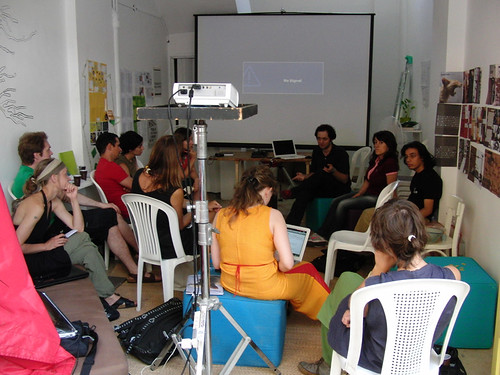
Goings On is a temporary platform that encourages creative exchange between independent practitioners. The aim is to facilitate communication about site specific and locally generated knowledge in a friendly and conducive environment. Goings On brings together practitioners for critical debate and exchange, providing opportunities for participants to reflect on their own practice while staying informed by a wider context. Goings On consists of project presentations, moderated discussions and collaborative group work as well as sharing meals and hanging out together.
Participants: Pikene på Broen (Norway), Kultivator (Sweden), rum46 (Denmark), El Hervidero (Spain), All Art Now, (Syria), Samandal (Lebanon), Makan House (Jordan), Medrar (Egypt), Cura (Turkey) and more.
“Space makers Beirut”
Public presentations by invited guests from Beirut, Friday June 25 at 6pm. Ceasar Namour (Recto Verso gallery) Christine Tohme (Ashkal Alwan) and Jadmur collective
“Space as Support”
Public presentations by invited guests, Sunday June 27 at 3pm. Pikene på Broen (Norway), Kultivator (Sweden), rum46 (Denmark), El Hervidero (Spain), All Art Now, (Syria), Samandal (Lebanon), Interruptions (Jordan), Medrar (Egypt), Cura Bodrum residency (Turkey) Music performance and drinks. All welcome!
98weeks Project Space is located at Naher street (Jisr el hadid), Chalhoub building, n 22 – ground floor, facing Spoiler Center, dead end street at the corner of Anthurium flower, left side, corner bldg.
The Herbologies/Foraging Networks programme of events, focused in Helsinki (Finland) and Kurzeme region of Latvia, explores the cultural traditions and knowledge of herbs, edible and medicinal plants, within the contemporary context of online networks, open information-sharing, biological andhydroponictechnologies.
The traditions of finding and knowing about wild food in the local Nordic environment are slipping away from the current generation. How can one attract their attention: With books, online maps, workshops, mobile-guided tours, open-source information or DNA code? Or learn how to grow them yourself, over the dark winter months?
ThePixelache Festivalevents introduce the different meeting points between the three collaborating partners, including seminar presentations by international artists and Finnish botanical experts; workshops sharing that knowledge with the public; a round-table discussion about foraging in the urban context; and a localised manifestation of theWindowfarms Project
(US).
Following, in a midsummer expedition to ruralKurzeme, Western Latvia,SERDEInterdisciplinary Art Group will lead fieldwork to learn about the cultural heritage of Balts using wild plants, and create documents for the younger ‘digital native’ generation.
. announcement of the wedding between art and agriculture during a three month period of exhibit in Kalmar konstmuseum During the exhibit time both practical and theoretical work will be done to prepare for the actual wedding. we have divided the show into three parts, which all have one seminar part and one or more interventions in the room and outside. as follows: 1. The family tree organic inventory, creating guestlist. Seminar, kids workshop and exhibition. Invited people with deep knowledge of art respectively farming, will bring/send their suggestions of individuals, movements, groups and directions to kultivator beforehand. This material will be placed in a charcoal drawing of a family tree. The tree will be constructed roughly around the suggestions we begin with, but it will continously grow, organically and non-absolute, nor objective or scientific, during the exhibitions first month. Artists will be working in the museum with the drawing, taking in suggestions and additional material along the way. If possible, students from Kalmar Högskola would work on a software to digitalize the charcoaltree, also in the room, and on the net in this period. 2. Land reform and open source? Discussing ownership and accessibility, seminar, exhibition and new Land/Source reform. Seminar with: Julian Priest http://www.banffcentre.ca/faculty/faculty_member.aspx?facId=3009 (streaming) lecture over back to the land movement and the early internet and open source groups from west coast US. Appr. 1/2 hour Maria LindmarkSE lecture of swedish land reform, history of ownership of land and other approaches to dividing and sharing land. Appr. 1/2 hour Andrew Paterson SCO/FI Tapio Mäkelä FI/UK Jonas Löhnn, “National board of swedish Jak bank” interest free alternative banking moderator: Jonas Gren The seminar (invited speakers and audience) produces a statement about ownership and accessibility. The statement from the seminar is posted on the glasswall of the exhibition room, and on a series of pallets with topsoil. The pallets are mobile gardens that will be planted and worked on during this phase of the exhibition. In the "new land/source reform" the pallets will be given away after the exhibition is over, and placed where their statements about ownership and accessability makes sense. (Institutions? public places? – still to be worked out) The filmed lectures from the seminar are projected in the room/on the net during this phase. . 3. Goes Ornamental Producing imagery. Work and exhibition, finishing party. Visual artists works in the room with ornamental studies in preparation for the wedding. The ornamental studies are corresponding to the information collected in the earlier stages of the exhibition, that remains in the room, but are autonomuos as far as function is concerned. The Ornamental studies examines the visual possibilities of the relation, going back to peasant decorative painting and forward to high tech ecosystem installations of today. Working artists are Erik Sjodin , http://www.eriksjodin.net/, "Supermeal" Gijs Freeling http://www.gijsfrieling.nl/ NL Floor Wesseling http://www.floorwesseling.nl/play/city-derbies/ NL Benn Sena da Silva, DK Marlene Lindmark http://www.marlenelindmark.com/picturs.html SE Terike Haapoja http://www.terikehaapoja.net/2009/ FIN Michiel Bussien "sheep lawn mower" Sisters of Sättra This will alter the officelike room of the two initial phases to a studio space, with several working artists and students, material sketches and ready objects mixed. The Ornamental phase and the whole exhibition closes with a masquerade party with the costumetheme: Ornamental studies for a wedding between art and agriculture.
. organic inventory, creating guestlist. Invited people with deep knowledge of art respectively farming, will bring/send their suggestions of individuals, movements, groups and directions to kultivator beforehand. This material will be placed in a charcoal drawing of a family tree. The tree will be constructed roughly around the suggestions we begin with, but it will continously grow, organically and non-absolute, nor objective or scientific, during the exhibitions first month. Artists will be working in the museum with the drawing, taking in suggestions and additional material along the way. If possible, students from Kalmar Högskola would work on a software to digitalize the charcoaltree, also in the room, and on the net in this period.
'
. “traditional knowledge have grown as a tradition that is being shared, it has grown cumulatively and collectively, it is what makes it deeply distinctive, international copyright is based on the idea of one individual who has certain rights, which builds on the idea of one person who has made an innovation and this is not the way knowledge works” /Dr Vandana Shiva Discussing ownership and accessibility, seminar, exhibition and new Land/Source reform. Seminar with: Julian Priest http://www.banffcentre.ca/faculty/faculty_member.aspx?facId=3009 (streaming) lecture over back to the land movement and the early internet and open source groups from west coast US. Appr. 1/2 hour Maria LindmarkSE lecture of swedish land reform, history of ownership of land and other approaches to dividing and sharing land. Appr. 1/2 hour Andrew Paterson SCO/FI Tapio Mäkelä FI/UK Jonas Löhnn, “National board of swedish Jak bank” interest free alternative banking moderator: Jonas Gren The seminar (invited speakers and audience) produces a statement about ownership and accessibility. The statement from the seminar is posted on the glasswall of the exhibition room, and on a series of pallets with topsoil. The pallets are mobile gardens that will be planted and worked on during this phase of the exhibition. In the “new land/source reform” the pallets will be given away after the exhibition is over, and placed where their statements about ownership and accessability makes sense. (Institutions? public places? – still to be worked out) The filmed lectures from the seminar are projected in the room/on the net during this phase.
.
.
. Producing imagery. Work and exhibition, finishing party. Visual artists works in the room with ornamental studies in preparation for the wedding. The ornamental studies are corresponding to the information collected in the earlier stages of the exhibition, that remains in the room, but are autonomuos as far as function is concerned. The Ornamental studies examines the visual possibilities of the relation, going back to peasant decorative painting and forward to high tech ecosystem installations of today. Working artists are Erik Sjodin , http://www.eriksjodin.net/, “Supermeal” Gijs Freeling http://www.gijsfrieling.nl/ NL Floor Wesseling http://www.floorwesseling.nl/play/city-derbies/ NL Benn Sena da Silva, DK Marlene Lindmark http://www.marlenelindmark.com/picturs.html SE Terike Haapoja http://www.terikehaapoja.net/2009/ FIN Michiel Bussien “sheep lawn mower” Sisters of Sättra This will alter the officelike room of the two initial phases to a studio space, with several working artists and students, material sketches and ready objects mixed.
. . . Organisers: RIXC, the Center for New Media Culture in cooperation with Association for Contemporary Culture NGOs (Latvia) and international partners.
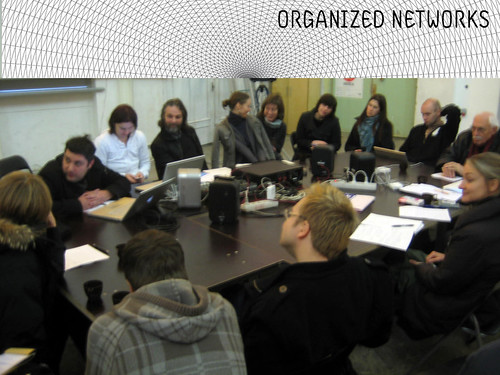
ABOUT ORGANIZED NETWORKS Training Programme for Cultural Network Management Riga, December 3 – 5, 2009 By addressing issues of cultural sustainability with focus on networking, the Training Programme for cultural network management entitled “Organized Networks” will take place in Riga, December 3 – 5, 2009, gathering together representatives from more then 20 cultural organisations, new media centers and networks from Baltic, Nordic and other European regions, as well as Caucasus countries. The Training Programme is co-organised by the RIXC, the Center for new media culture (Latvia) and partners from Finland (Pixelache festival, MARIN Association), Norway (Piksel, iolab, Atelier Nord), Iceland (Lorna), Sweden (Kultivator, C-Studio/Interactive Institute, New Media Meeting), Denmark (FieldWork, WindFestiva/Energy Academy), Lithuania (KCCC), Latvia (Association for Cultural NGOs), the Netherlands (Baltan Laboratories), Armenia (ACCEA/NPAK) and Georgia (Center for Contemporary Art – Tbilisi, GeoAir). . . . Conceptual background The current global crisis motivates us again to think of “how to remake the world” as many of methods used previously have turned out finite and unsustainable. New approach in terms of both – design and production today is urged nearly in all fields, including culture. The idea of “networks” is not new, but it contains potential that hasn’t been exploited to a great extent yet. New media networks have already more then ten years of experience. Translocal as well as local networking has played an important role in supporting operation of small-scale cultural organisations. However, networks as such are not only virtual structures, there are people and real technical infrastructures behind them, and our network culture also are facing the same sustainability issues. How to work out new strategies and methodologies for improving and developing more sustainable translocal cooperation practice (“organized networks”). And how to develop new network-based models for facilitating individual / local cultural organisations (“network nodes”)? An idea of “organized networks” (as proposed by Ned Rossiter, Geert Lovink) considers, if network can be seen as a new form of institution, and argues that it is relevant not only to work out new methodologies for networking practice – i.e. tools and protocols (agreed ways to support activity in the network), but also to discuss ‘collaborative value system’ (dealing with issues such as funding, internal power plays, and the demand of “accountability” and “transparency”, etc.). The Training Programme will investigate, what strategies “organized networks” can offer for sustainable development of cultural sector, and translocal cooperation in particular. The Training Programme will specifically focus on evaluating the cultural network practice of Baltic-Nordic-EU region. This will include NICE and Pixelache festival networks, Baltic-Nordic artists residency programmes, Nordic funding structure, future development of new media art centers, their local and translocal cooperation strategies, etc. The ways how networks can create and sustain their own infrastructure will also be discussed. Geographically, the Programme also aims to enhance European cultural area by drawing out new cultural cooperation axis connecting Nordic, Baltic and Caucasus regions on the Northern and Eastern border of Europe. With regard to the conceptual content, the Training Programme will explore the potential of emerging interdisciplinary cooperation among the fields of arts, science and sustainable (information and energy) technologies, in order to set up a common ground for developing Art and Renewable Energy Network and to discuss possible future co-projects. It also will be disucssed how artists, new media activists, renewable technology researchers, social software developers, open source activists, designers of autonomous and alternative infrastructures who already work together, deal with sustainability issues, discussing how may cultural organizations and their networks benefit from these artistic innovations for building their future sustainability. . . . . . . . . . . . . . . . . . . . . . . . . . . . . . . . . . . . . . . . . . . . . . . . . . . . . . . . . . . . . . . . . . . . . . . . . . Locations: Public lectures: Spīķeri, kim? building, 3rd floor, Maskavas iela 12/1, Riga (near Central Market). Training programme: RIXC Media Space, 11. Novembra krastmala 35, entrance from Minsterejas iela (in Old Town). . . . Organisers: RIXC, the Center for New Media Culture in cooperation with Association for Contemporary Culture NGOs (Latvia) and international partners. . . . Contact: rixc@rixc.lv tel. +371-26546776 (Rasa Smite) tel. +371-67228478 (RIXC office) . . . Support: European Culture Foundation, Nordic Culture Point, State Culture Capital Foundation, Hotel Elizabete.
At the harvestfeast of 2009 we were honoured with works of: Music and Art Centre “Yellowbox” who made a living jukebox with singer songwriter John Leo Carter.
The artist Jonas Rahm,
The photographer Simon Johansson,
The artist Marlene Lindmark
and the philosopher Jonas Gren.
Besides this we showed works of Kultivator
and sold vegetables from the farm.
For European union agricultural minister meeting in Växjö, Sweden
invitation by Växjö arthall
Seed up !
Is a campaign to support the Belgian project seeds for food, initiated by prof. Willem van Cotthem. The project objective is to collect seeds for growers in North african refugeecamps. Just the seeds from tropical fruit and vegetables that we have an abundance of in our supermarkets and on our kitchentables, are expensive and hard to get hold on for people cultivating in the areas where they climatwise easily can be grown. Seeds are by nature hardy and if we collect them from our food, dry them and pack them with some care, they can be used and provide food for people in camps that have very little access to fresh food otherwise. The very grassroot, user friendly character of the action, is also suggesting an alternative to great scale aid projects, and great scale agriculture policies (=monopoly), letting information and seeds travel independently over unionborders
Cowdown !
Kultivator shows two pieces, that concerns the development towards less biodiversity and injust distribution of foods and goods globally, promoted a.o. by European union Common Agricultural Policy (CAP). In both works the link is laid between the restriction on freedom and development that monopoly and closedcode/copyright is causing in software and the same phenomena occurring on farming and food supply.
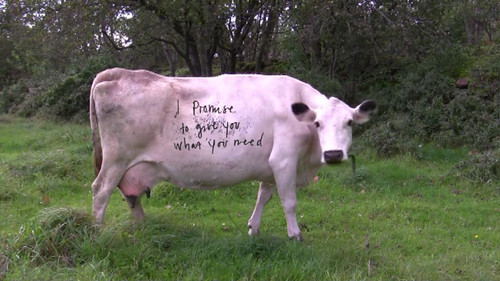
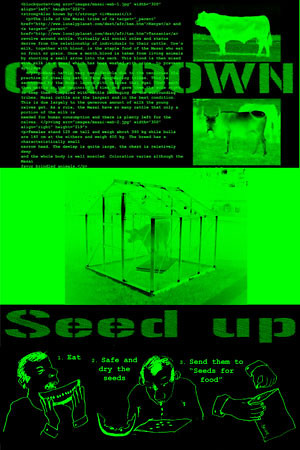
The Cowdown is an installation with a reconstruction of a now extinct breed of cow, ”The Ölandsko” that used to be common on the island where Kultivator is sited. The cow is modelled 1:1, and standing inside a small ready made greenhouse outside Växjö public library. Inside the library, visible from outside, is a screen with the cowdown terminal animation, showing source code and a large variety of cattle breeds from all over the world. Images of the various breeds and short facts about their characteristics, history and breeding schemes are colored in the terminal green black, suggesting that we are watching a wonderful richness of variety, that needs to be kept, and at best expanded.
Symposium is organised by RIXC, The center for new media culture with the support of Nordic Culture Fund, and Nordic Culture Point
ABOUT SYMPOSIUM
The 4-day symposium gathering together artists, activists, technologists, scientists and researchers, to share their ideas and explorations which deal with renewable energy resources, alternative ecological use of technologies, and other sustainability related issues.
Themes:
[bio / eco]
Environmental science and ecology – Ecosystem research – Permaculture and biosystem design – Biomass as renewable energy resource – Critical and alternative approaches to biotechnology
[solar energy]
Sunlight as constant energy resource – Process of photosynthesis – Solar energy technologies
[open source]
Sustainability using open source/information approaches: in art and grassroots culture, ecology, architecture and environmental design
[myths & legends]
Historical traditions and modern alternative solutions – Cultural transformations: energy in nature and in city – Future visions of terrestrial energy
Location:
The symposium will take place in artists residency center SERDE in Aizpute, a small town in Kurzeme region of Latvia. SERDE is located in old wooden historical building that also will be used as a specific case for which alternative and ecological approach in developing sustainable systems and renewable energy technologies can be explored and applied.
http://www.serde.lv
The outcomes of the symposium – new projects, artworks, co-productions – will be presented during the international art and science conference ENERGY that will take place in the framework of Art+Communication festival in Riga, October 8-10, 2009. (The call for proposals for ENERGY festival and conference is currently open: deadline August 31, 2009. http://rixc.lv/09)
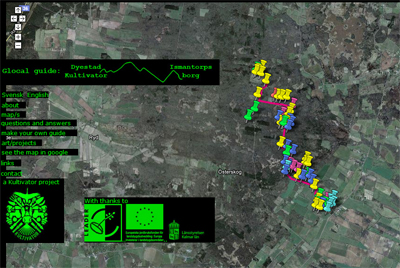
Glocal guide is an ongoing Kultivator project.
Sustainability using open source / information approaches: in art and grassroots culture, ecology, architecture and environmental design
Sustainability using Open source approaches on eco tourism and local community awareness.
Linking The right of public access to nature (part of the swedish constitution, giving rights to anyone to roam the wild) with the rights and possibilities of public access to information and history.
We present our recent Project ”Glocalguide”, that links contemporary open source structures for information sharing to an ancient common walking path.
From the village commonland, next to Kultivators ground, leads a path through the forest to an ancient ruin fortress, dated to somewhere around 200 b.c.
The path has historically been used for bringing cattle out to graze in the forest, and for people from now abandoned villages in the forest to go to school, church or the market. Much of the flora and fauna along the path is rare and unique for swedish nature, due to the long history of use by man and grazing animals. The fortress ruin the path leads to, has never been fully excaveted and no all over accepted explanation over its function exists, leaving plenty of room for popular beliefs and tales over.
Information and knowledge about the flora and fauna, historical facts and speculations are highly interesting and plentiful, but hard to get hold on for a visitor, or the younger generation living here.
The project intended to set a structure, both analogue and digital, for sharing this information, and build on an open source guide for this specific route, that will be owned by everybody and nobody, mimmicking the common use of as well the forest as of the path with communal respect and cooperation. In our presentation we will give a short resume over this work, and show examples of the strategies we have used to engage different cathegories of people to contribute.
Glocal guide is an ongoing Kultivator project. Sustainability using open source / information approaches: in art and grassroots culture, ecology, architecture and environmental design Sustainability using Open source approaches on eco tourism and local community awareness. Linking The right of public access to nature (part of the swedish constitution, giving rights to anyone to roam the wild) with the rights and possibilities of public access to information and history. We present our recent Project ”Glocalguide”, that links contemporary open source structures for information sharing to an ancient common walking path. From the village commonland, next to Kultivators ground, leads a path through the forest to an ancient ruin fortress, dated to somewhere around 200 b.c. The path has historically been used for bringing cattle out to graze in the forest, and for people from now abandoned villages in the forest to go to school, church or the market. Much of the flora and fauna along the path is rare and unique for swedish nature, due to the long history of use by man and grazing animals. The fortress ruin the path leads to, has never been fully excaveted and no all over accepted explanation over its function exists, leaving plenty of room for popular beliefs and tales over. Information and knowledge about the flora and fauna, historical facts and speculations are highly interesting and plentiful, but hard to get hold on for a visitor, or the younger generation living here. The project intended to set a structure, both analogue and digital, for sharing this information, and build on an open source guide for this specific route, that will be owned by everybody and nobody, mimmicking the common use of as well the forest as of the path with communal respect and cooperation. In our presentation we will give a short resume over this work, and show examples of the strategies we have used to engage different cathegories of people to contribute.
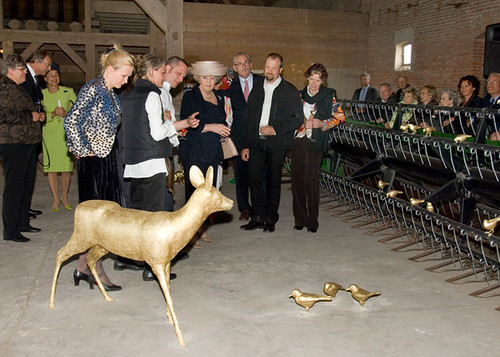
Land, art in the Zeeland Wilhelminapolder presents an exhibition in art station Hongersdijk focussing on man in relation to the surrounding landscape. The occasion for the exhibition is the 200th anniversary of the Royal Wilhelmina Polder Society (De KMWP). Works of art by Maartje Korstanje, Kultivator, Dirk Zoete, Eva Fiore Kovakovsky and Tue Greenfort are on show from 25 April in the Hongersdijk farmstead. Organised by SKOR and CBK Zeeland Kultivator will make a work consisting of four parts for the Wilhelmina Polder exhibition.We look at future visions and history of the place, by exploring interfaces between people, wildlife and contemporary agriculture. The work can but does not have to be clung together, the different parts will be: An installation, with working title ”King Midas”, is build up round and including the header of the combine harvester of the farm. On top of the header, and above it in the air, gold coated realistic modelled sparrows and seagulls (common scavengers of the fields) will be positioned. On a distance of a few meters stand a young deer, also realistic modelled coated with gold. (Seemingly made of gold, but in fact covered with a thin gold-like coat) "Kitchen animals" An audiovisual work combining documentary film sequences from kitchens (people making stamppot) in the Wilhelmina Dorp, with animations of wildlife "Optional": Possible landscapes. Visions on future and far past landscapes of the polder. Framed montages "Packages": An experiment in free hand drawing and use of package- and presentation material for the farms produce, foremost potatoes. The drawings/collages will be both separate and made directly onto walls and interior.
Land, art in the Zeeland Wilhelminapolder presents an exhibition in art station Hongersdijk focussing on man in relation to the surrounding landscape. The occasion for the exhibition is the 200th anniversary of the Royal Wilhelmina Polder Society (De KMWP). Works of art by Maartje Korstanje, Kultivator, Dirk Zoete, Eva Fiore Kovakovsky and Tue Greenfort are on show from 25 April in the Hongersdijk farmstead. Organised by SKOR and CBK Zeeland
Kultivator will make a work consisting of four parts for the Wilhelmina Polder exhibition.We look at future visions and history of the place, by exploring interfaces between people, wildlife and contemporary agriculture. The work can but does not have to be clung together, the different parts will be:
An installation, with working title ”King Midas”, is build up round and including the header of the combine harvester of the farm.
On top of the header, and above it in the air, gold coated realistic modelled sparrows and seagulls (common scavengers of the fields) will be positioned. On a distance of a few meters stand a young deer, also realistic modelled coated with gold. (Seemingly made of gold, but in fact covered with a thin gold-like coat)
“Kitchen animals” An audiovisual work combining documentary film sequences from kitchens (people making stamppot) in the Wilhelmina Dorp, with animations of wildlife
“Optional”: Possible landscapes. Visions on future and far past landscapes of the polder. Framed montages
“Packages”: An experiment in free hand drawing and use of package- and presentation material for the farms produce, foremost potatoes. The drawings/collages will be both separate and made directly onto walls and interior.


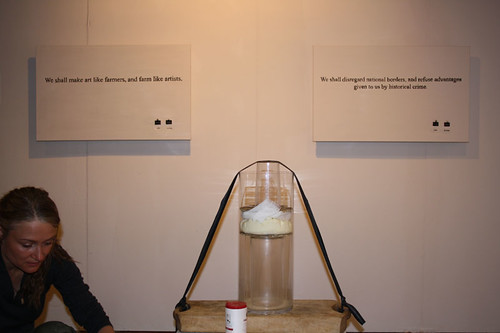 A Cross cultural Nomadic Cheese in our boot at Supermarket. 10 litre of milk will be brought from Kultivators farm om Öland, and during the art fair it will be processed into à cheese. This cheese is the second one in à series of cheese made in cultural institutions. Micro cultures in the non- pasteurised milk from the farm will react and developed together with the collective cultures from artist – run gallery's and the great culture of Stockholms Kulturhuset, for à cheese with strong and complex taste.
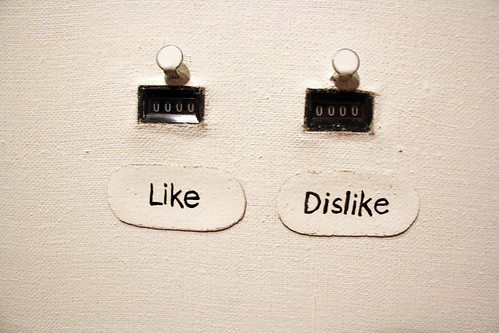 An opinionresearch.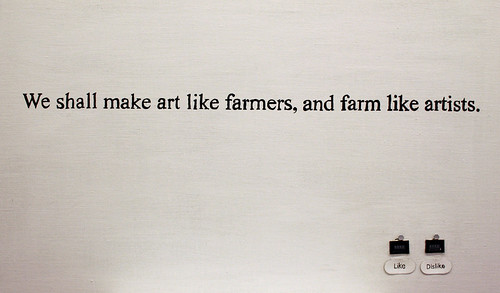

 Werk in collaboration with 98weeks Project Space presents
 The Herbologies/Foraging Networks programme of events, focused in Helsinki (Finland) and Kurzeme region of Latvia, explores the cultural traditions and knowledge of herbs, edible and medicinal plants, within the contemporary context of online networks, open information-sharing, biological and


 For European union agricultural minister meeting in Växjö, Sweden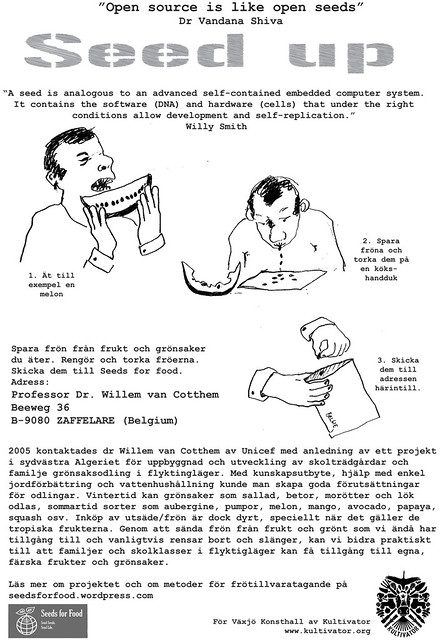
 info
info